Digital Nomad Essentials: What Do You Actually Need to Work From Anywhere?
It’s been almost a decade since we decided to become digital nomads, and I feel like I’m still learning new things every day. Most of the time, from the people I meet, and sometimes simply through life experiences. And that’s what I love so much about this lifestyle.
The lifestyle and opportunities that come with being a digital nomad can be glamorous… Working from cafés, hopping between countries, and calling some of the coolest coworking spaces in the world your office is seriously a dream, and I wouldn’t change it for a thing.
And while I feel like we’re living our dream life, it’s not perfect. There’s a lot that goes on behind the scenes and challenges that pop up regularly (like when your Airbnb says they have good wifi and you can barely check your email on it).
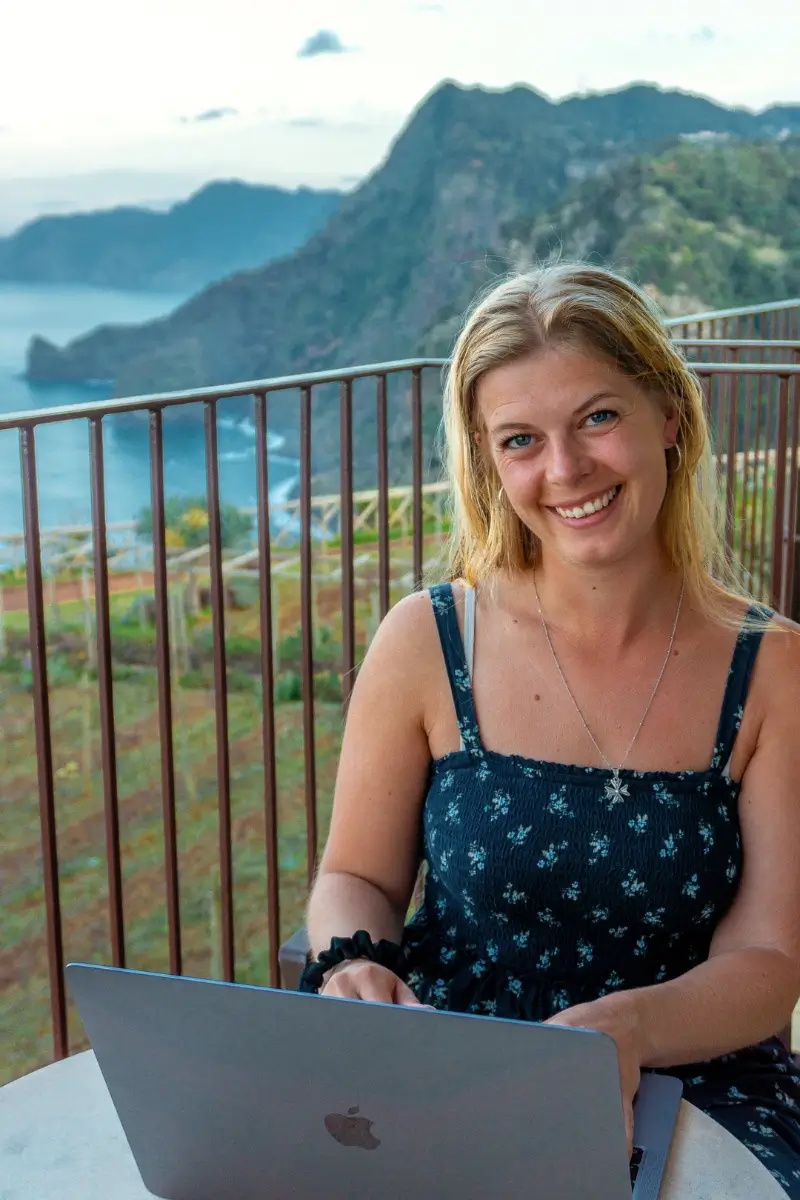
These struggles were a lot bigger (and more frequent) in the beginning, though, and after years on the road, I feel like we’ve nailed down the structures and key essentials that help make our life a lot easier as nomads.
In this post, we’re gonna share these tips with you in the hopes they make your life easier as well. So whether you’ve been dreaming of living out your digital nomad dream, or you’re already living it but have hit some bumps along the way, keep reading…
Disclosure: This post has been created in collaboration with Pangia. Everything in this post is based on our personal opinions and experiences. This post also contains affiliate links, which means if you decide to use the links and make a valid purchase, we will receive a small commission at no additional cost to you.
These are the digital nomad essentials we swear by
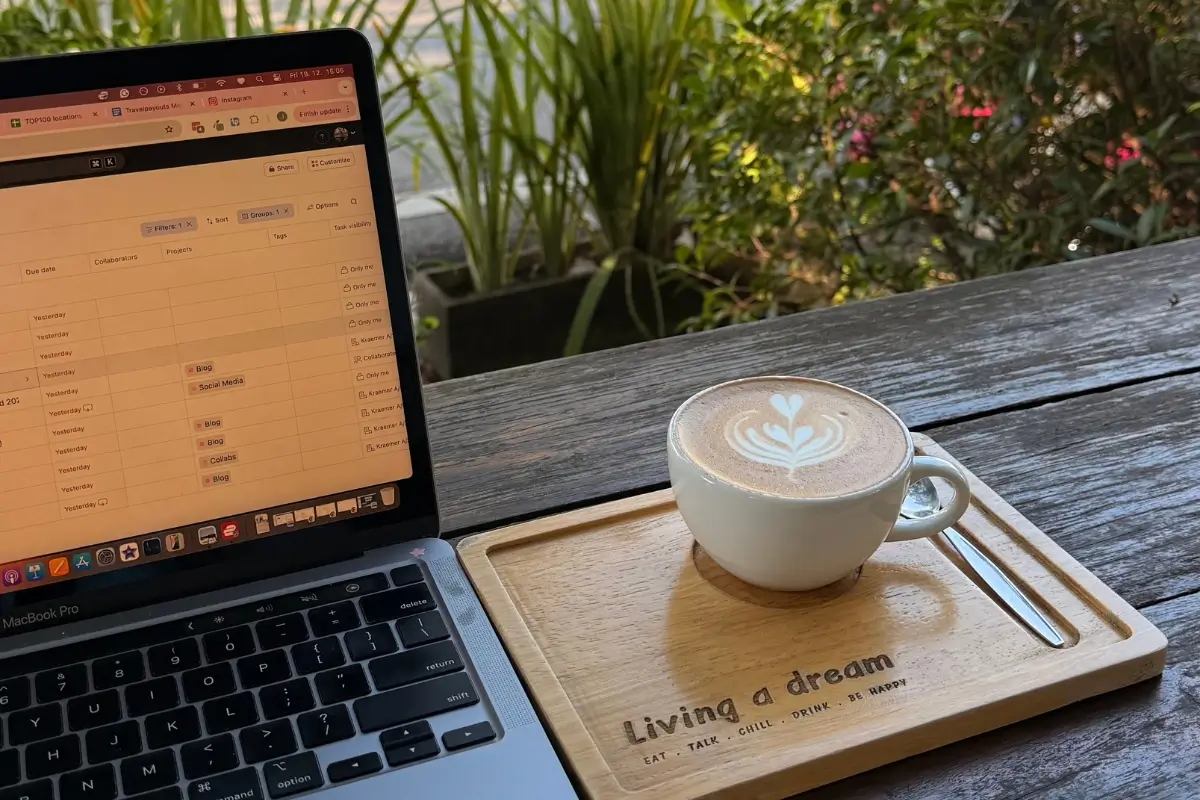
One thing I’ve realized along the way is that everything around me is more enjoyable when I have the right setup. Things like reliable internet, a relaxing or inspiring work environment, and having a good work setup make everything so much easier.
It’s all about reducing friction, really. At the end of the day, we’re nomads, so we can enjoy and explore these beautiful places we go to – so the better our work setup, the faster we can get our work done, the more time we can enjoy exploring the destination we’re in. This also helps us avoid digital nomad burnout.
Reliable internet is a non-negotiable
No matter where you go and what type of work you do, reliable internet is (obviously) one of the most important things you need to be successful!
We’ve had moments at colivings where the internet was spotty, we’ve gone to work at a nice café just to find that their internet is down – and that’s exactly why certain places around the world have become more popular for digital nomads. Because of their reliable internet.
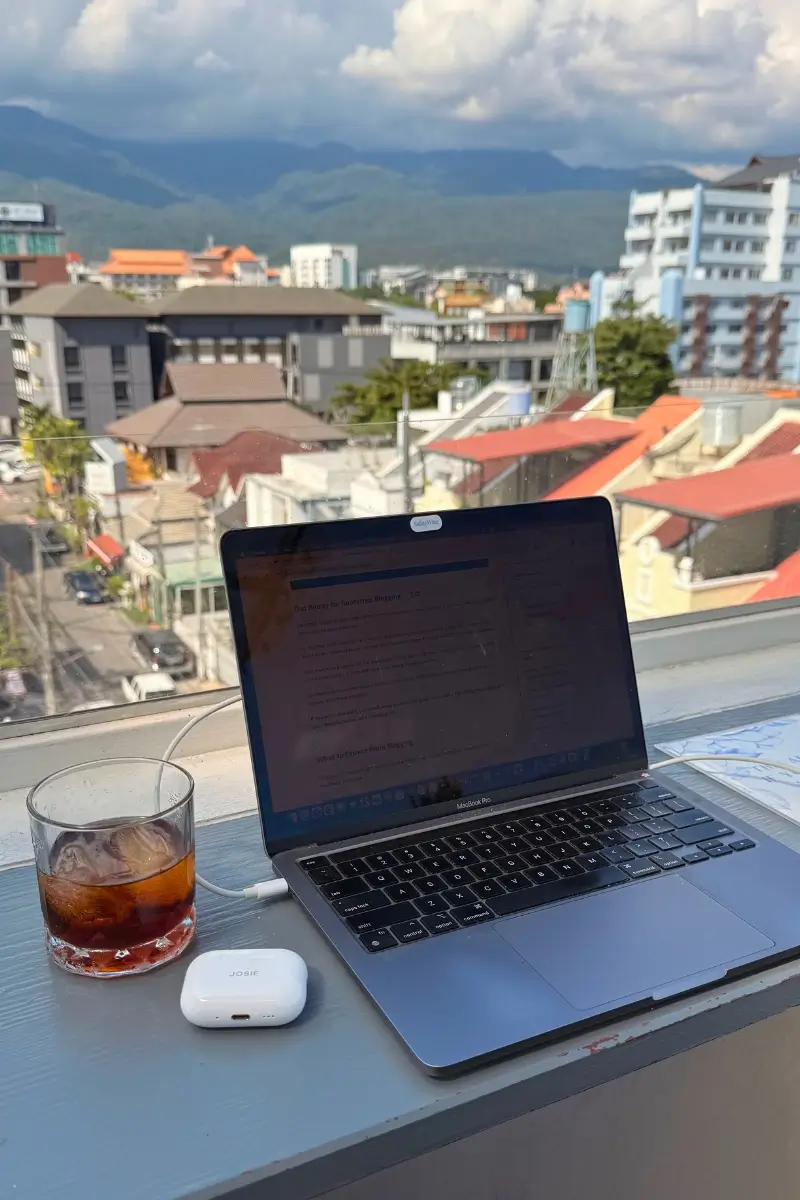

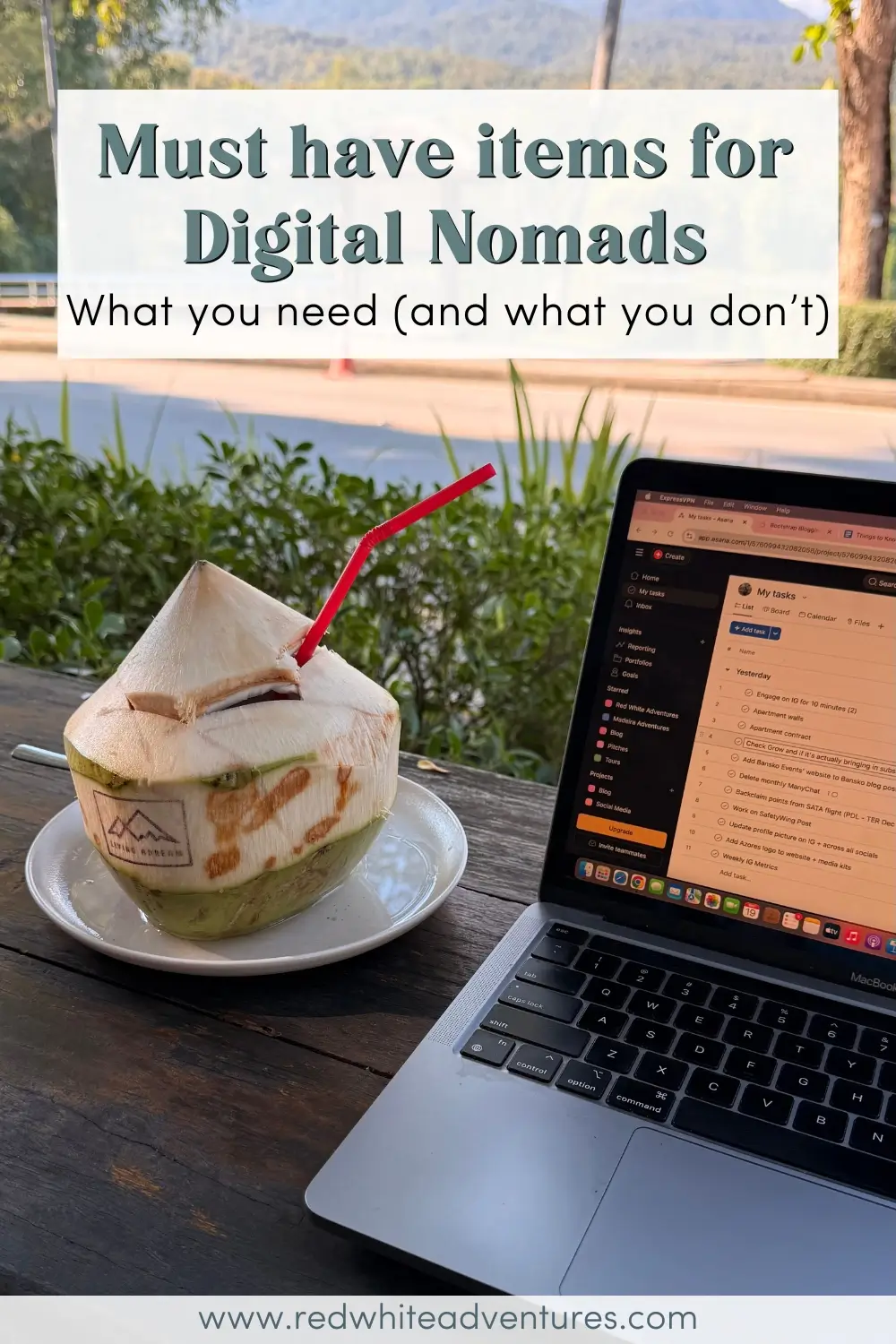
This is why places like Chiang Mai are so popular for nomads, because the internet is so reliable. Almost every single cafe we went to in Chiang Mai had amazing internet, and the laptop culture there is incredible.
Same thing when we go to Bansko, Bulgaria. The coworking spaces there are great, the internet is extremely good and reliable, which makes for a great work environment.
The point is that after years of travelling and living the digital nomad life, when we do want to work and get stuff done, we prioritize going to locations and places with good infrastructure. It just helps so much with being productive and getting stuff done!
Getting an eSIM with unlimited, worldwide data
That being said, we also don’t want to choose our destinations purely on where there is good wifi – we want to go to places that we’ve been dreaming of visiting, no matter the wifi situation.
We’ve been to countries like Kenya and nomading in Sri Lanka, where powercuts happen frequently, and both the electricity and the wifi go out.
We can easily get by for a few hours without electricity, but it’s hard to get any work done without the internet. So we always have a data backup in the form of an eSIM!
For a long time, we relied on our local plan from Denmark, and within Europe it worked great, but our data plans were limited – and as soon as we left the EU, it no longer worked (or it did, but the roaming fees were crazy!).
We’ve had more than one incident where we suddenly got charged $60 because we’d maxed out our data without being informed by our provider, and I just don’t want to deal with that.
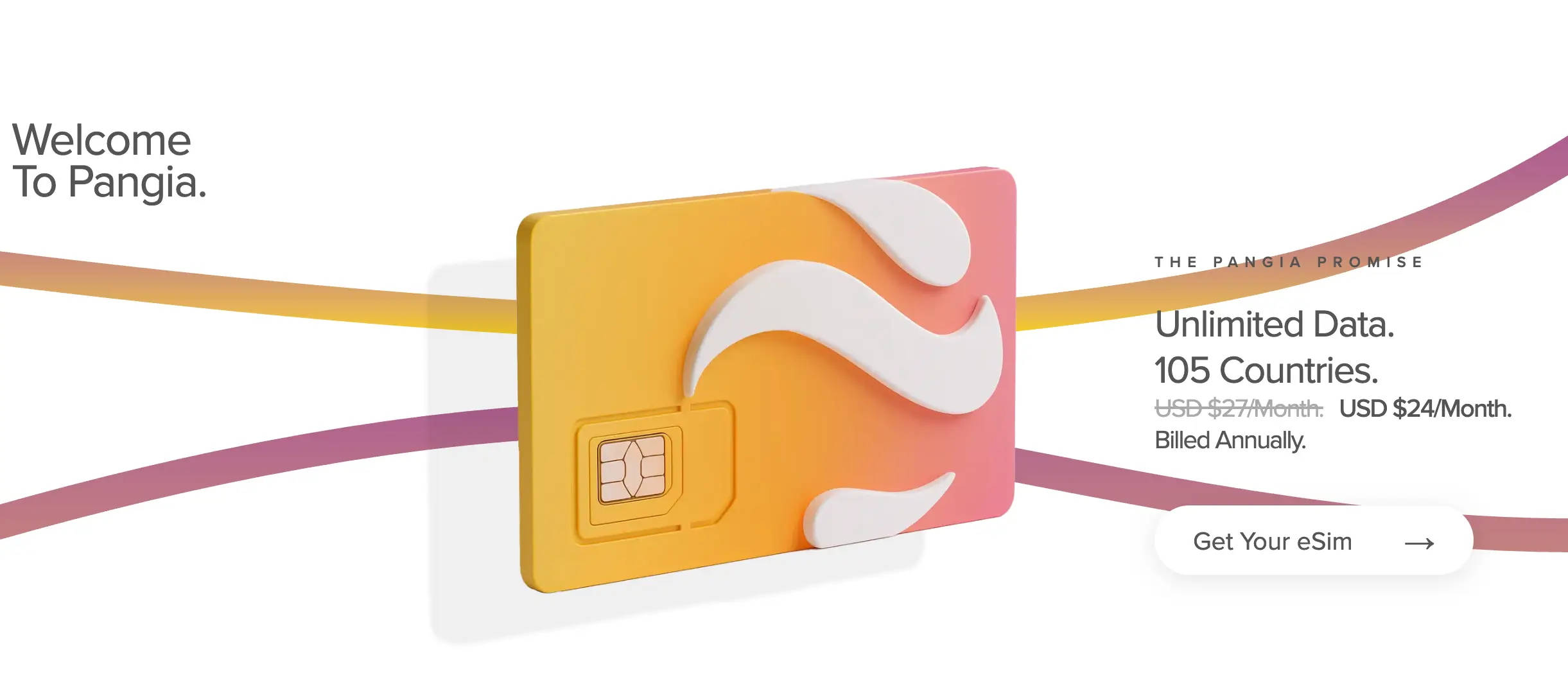
These days, we rely on eSIMs like the Pangia Pass eSIM, which has unlimited data (like truly unlimited) across 105 countries.
We pay $35/month (use this link to get 10% off) and get to use our eSIM in 105 different countries – and we never have to worry about running out of data, extra roaming fees, or having to switch between eSIMs when we travel.
So far, we’ve used it in Thailand, the UAE, Australia, and New Zealand, and it’s been so nice not having to worry about the wifi anywhere (and also, some public wifis are a bit dodgy, but we’ll get into that later in this post).
Pangia lets you hotspot, too, so you can truly work from anywhere – and you can share data with your partner or travel companion if you’re travelling with someone!
Having an unlimited phone plan has been a game-changer for us, and I can’t see how we’ll ever go back to traditional sim cards. You can check out Pangia here.
A good work set-up is a must
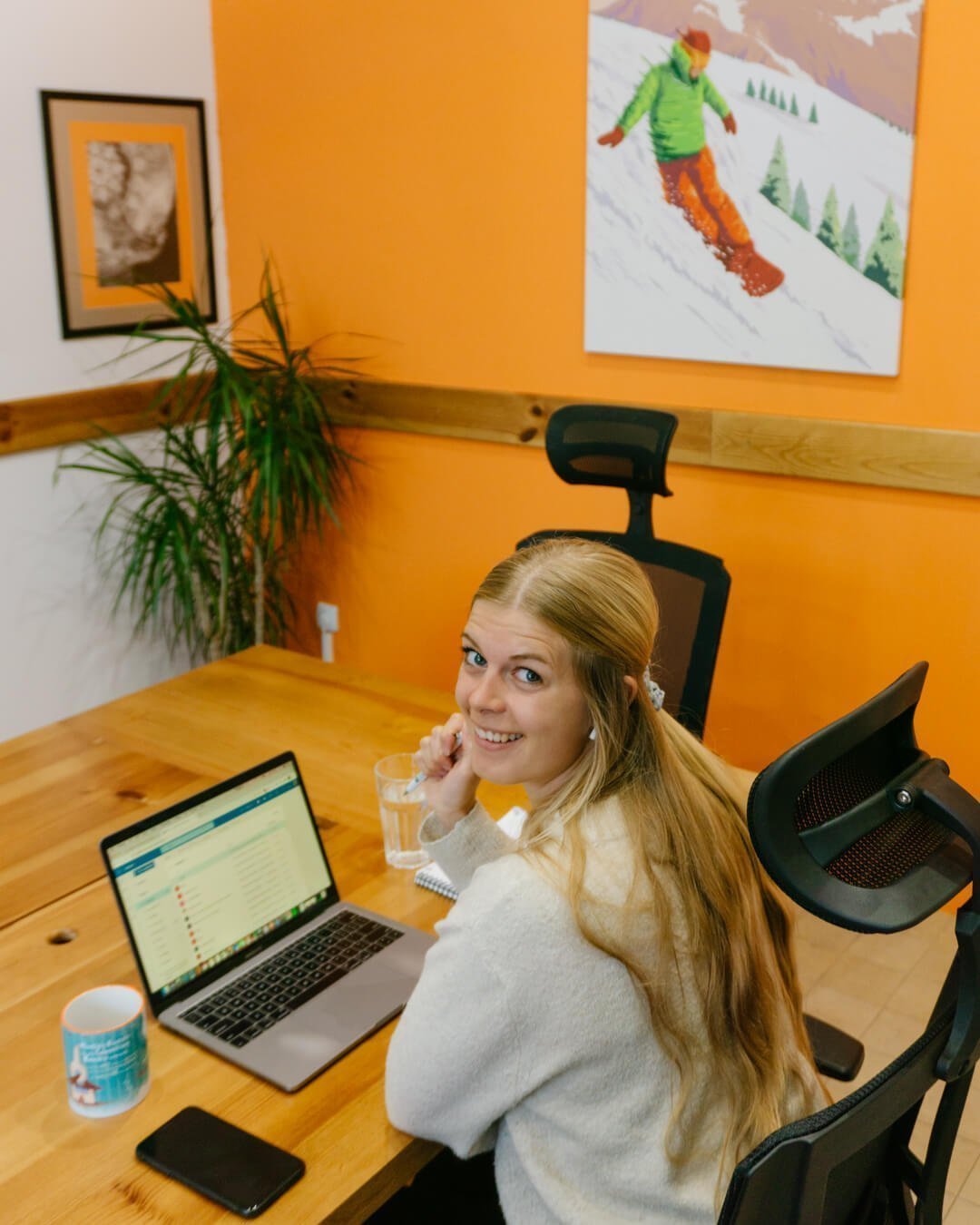
Over the years, we’ve learned that having a simple and lightweight work setup makes a huge difference when you’re constantly on the move. Especially for us, since we like to work at coffee shops and coworking spaces, the less we need to bring, the better.
Honestly, most of the time, the basics are enough. As long as it lets you do focused work and support a good work posture, that’s all you need.
Here’s what we usually bring:
- Reliable laptop with a long-lasting battery
- Good pair of noise-cancelling headphones
- Universal multi-plug adapter (this is the one we use)
- Laptop stand
- Wireless keyboard (we don’t have this yet, but it’s on my list)
- Our Nalgene waterbottles with fun stickers
We try to stay in our accommodation for at least a month. But of course, plans can change (that’s the life of a digital nomad), so the less we have to carry from place to place, the better.
At the end of the day, your work setup should support your lifestyle, not slow it down. If something doesn’t make working easier or more comfortable, it’s probably not essential.
How to pick good accommodation


Speaking of accommodation, we used to just pick the cheapest possible accommodation we could find. This was back in 2019 when we started nomading, and we were on a super-tight budget.
These days, we prioritize staying in places where we actually feel at home. There are a few criteria we have when browsing accommodation.
For example, having a proper kitchen is a must so we can cook at home. Especially when we’re in Europe, New Zealand, and North America, where eating out costs a bit more, this is important. If we’re in Asia, this is less of a priority as we tend to eat out more there.
Other things we look for and try to get every time are a washing machine, a big comfortable bed (so we actually sleep well), a proper shower, and ideally a nice work desk too.
Surprisingly, though, a work desk isn’t the top priority on our list as we often work from coworking spaces and cafes. So while it’s a nice-to-have, it’s not the primary necessity for us.
In terms of where we usually find accommodation, our go-tos are Flatio, Airbnb, Booking.com, and through FB groups. We also like to join coliving experiences (and actually host our own Pop Up Colivings a few times a year).
Staying secure online (using a VPN)
Online security is something you can’t really ignore in today’s day and age. When you’re working remotely and constantly connected to public wifi, there’s always a risk that your data gets leaked.
Cafés, coworking spaces, airports, and even accommodations all come with different levels of security, and you don’t always know how safe a network actually is.
We’ve learned to be a bit more mindful about how and where we connect. Using a VPN (Virtual Private Network) on public wifi has become a habit for us. (Although now that we use Pangia, we don’t even have to connect to the wifi anywhere).
But when we do connect to public wifi, we always turn our VPN on before doing anything – especially when dealing with work accounts, banking, or anything that requires logging in.
In a perfect world, I probably wouldn’t log into private accounts in public places, but it is good to know there are options like the VPN or using a hotspot through your phone with the eSIM.
I wouldn’t say I’m paranoid, but we have heard some horror stories, and I just like to reduce risk where I can.
We currently use ExpressVPN, but we recently upgraded our Revolut accounts and actually get NordVPN included for free in our plan – so although ExpressVPN seems to be the best on the market, we might test out NordVPN for a bit!
Just like everything else with this lifestyle, keeping things secure doesn’t need to be complicated. A few simple habits go a long way and help you focus on your work instead of worrying about what might go wrong online.
Staying organized while travelling
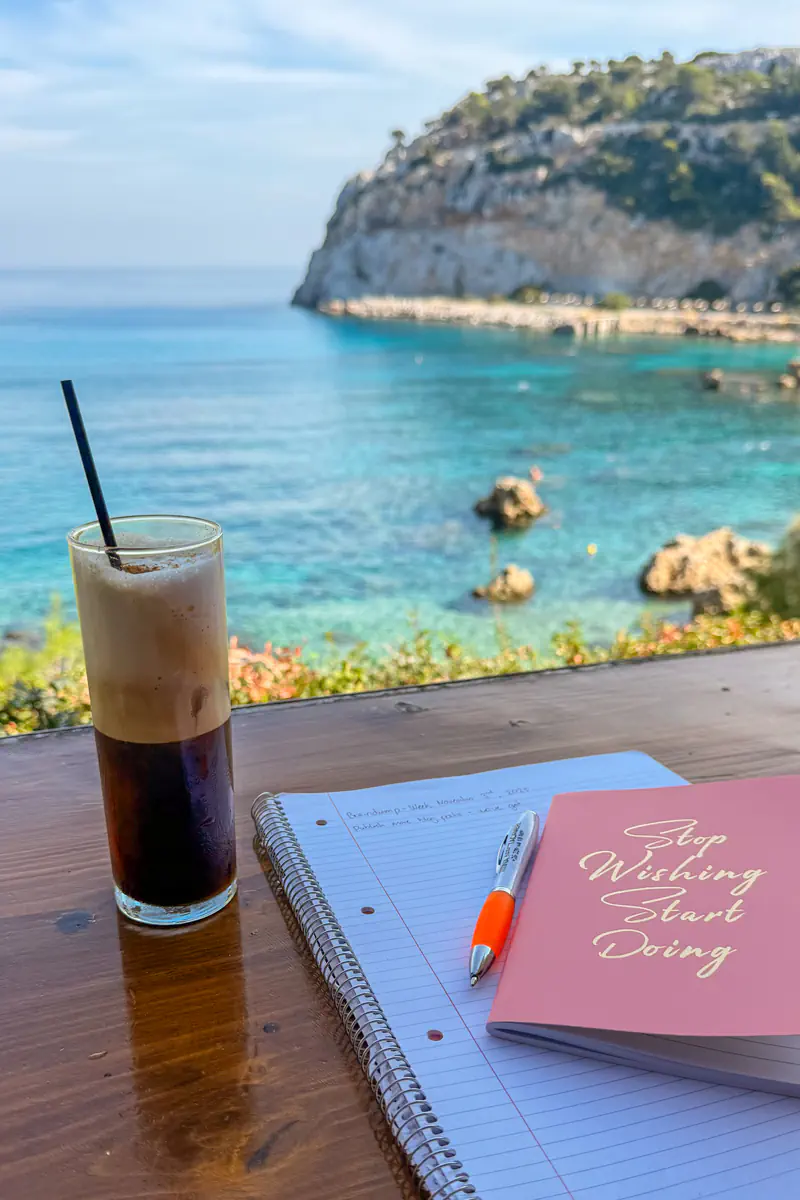
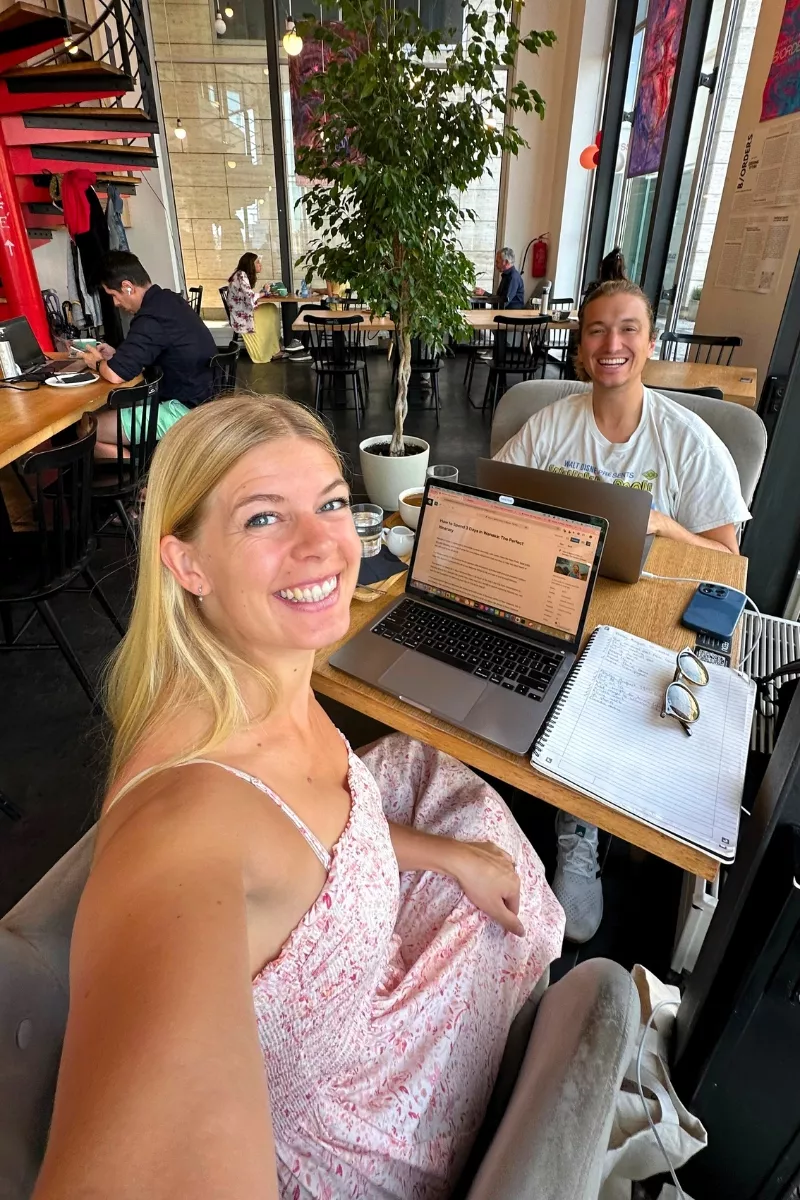
One thing we’ve learned over the years is that staying organized – especially when it comes to our workflow – becomes more important the longer you travel.
When your life is spread across different countries, accommodations, and time zones, things can get messy pretty quickly if you don’t have some sort of system.
For us, keeping everything organized online makes the biggest difference! Travel plans, accommodation details, work notes, and important documents all live in their designated places online, so we’re not constantly searching through emails or screenshots when we need something quickly.
To give you a few examples:
All of our travels (flights, accommodation, activities, etc.) are uploaded to our calendar with all the details included, such as the location, the booking reference code, which platform we booked on, and a PDF file attached. That way, we always have everything we need when we need it.
As for our work, we’ve been using Asana for years, but are actually migrating over to Notion right now to just stay even more organized.
While we try to keep work off our phones as much as possible, we do have Notion downloaded to our phones so we can braindump whenever we think of something important or something we need to remember. That way, we can take care of it whenever we’re back on our laptops.
It doesn’t need to be complicated – the goal is simply to reduce friction. Knowing where things are saves so much time, reduces stress, and makes it much easier to focus on work (and fun!) instead of logistics.
When your organization system works for you, the whole digital nomad lifestyle feels a lot more manageable.
You may also like…
- How to Stay Productive as a Digital Nomad (While Travelling)
- Our Journey: From Broke Backpackers to Full-Time Travel Bloggers
- Why Slowmading is The Future of Travel
- Is SafetyWing the Best Travel Insurance for Digital Nomads?
Final thoughts on which essentials you need as a digital nomad
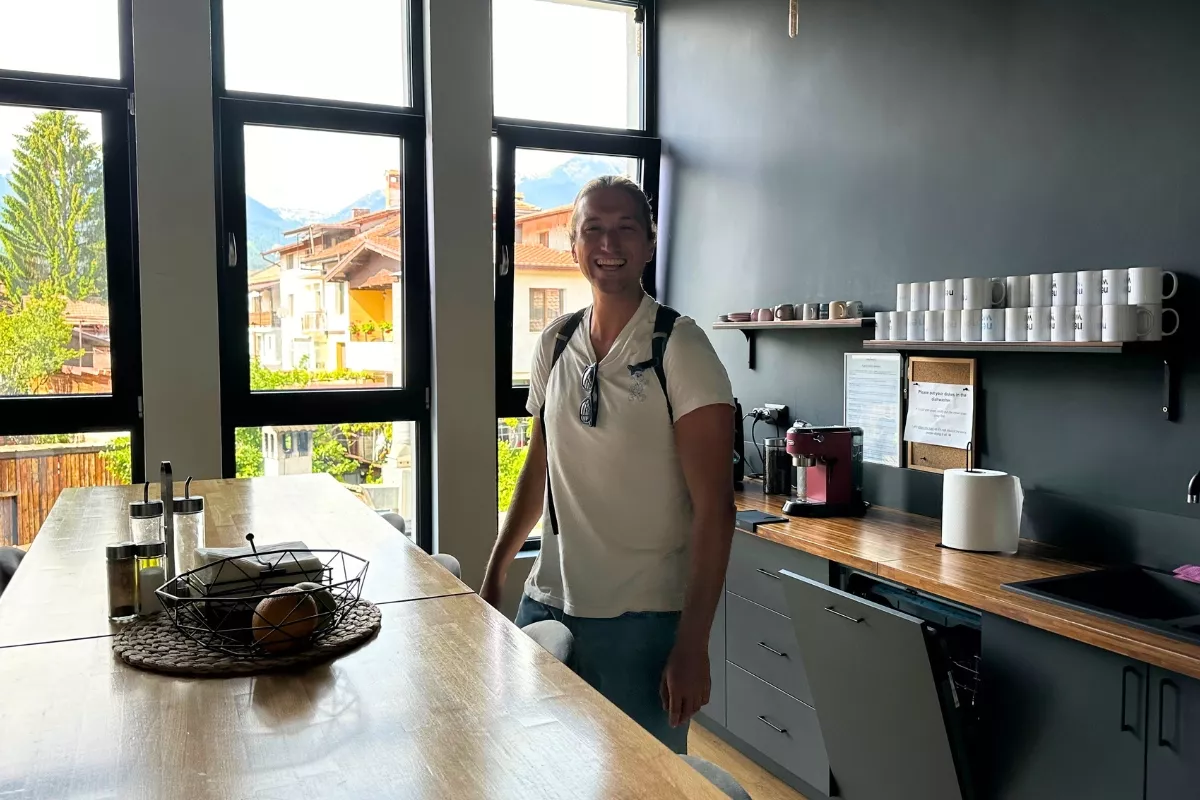
Living the digital nomad lifestyle has been one of the most rewarding experiences for both of us. It’s taught us so much about life, business, and different cultures – and we’ve made some incredible friends from all over the world.
One of our biggest takeaways, though, is that the ultimate freedom (for us) comes from having the right things and setups in place – so that when we’re off, we can enjoy our time to the fullest.
Things like reliable internet, flexible mobile data, a simple work setup, a good place to work from, and some good habits and systems around security and organization go a long way in making this lifestyle sustainable.
You don’t need the perfect setup or every tool out there to make it work. Over time, you figure out what some of those things are and focus on those.
In this post, we’ve pointed out some of the digital nomad essentials that make our day-to-day digital nomad life easier to navigate and enjoy.
We hope this guide helps you on your journey, and if you have any questions about digital nomad life, awesome nomad destinations, or anything else, feel free to DM us on Instagram @redwhiteadventures or leave a comment below!
📍 Save this post for later & share it with a friend