Everything You Need to Know Before Visiting Sri Lanka for the First Time (9 Helpful Tips)
Sri Lanka is one of those countries that instantly captures your heart. With its tropical beaches, traditional tea fields, incredible food, national parks full of wildlife, and incredibly welcoming people, it’s the kind of place you can spend weeks exploring and still feel like you’ve only scratched the surface – at least that’s how we felt when leaving.
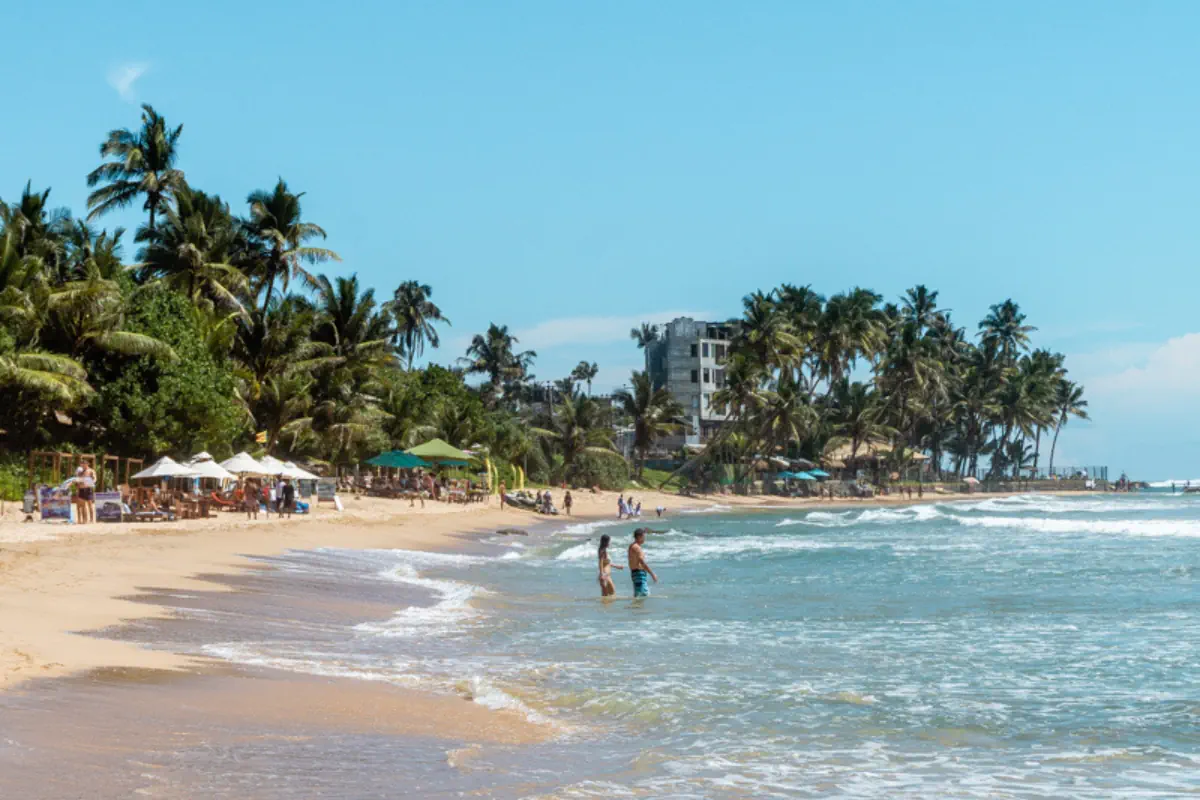
Having visited Sri Lanka ourselves, we quickly realized there are a few things we wish we had known before our trip. That’s why in this post, we share our thoughts and insights that can make your experience better and smoother.
Whether you’re planning to join a surf camp like we did, go on a cultural adventure, or explore everything Sri Lanka has to offer, here’s everything we think you need to know before you go.
Disclaimer: This post contains affiliate links which means if you decide to use the links and make a valid purchase, we will receive a small commission at no additional cost to you. Thank you for your support!
What you need to know before Visiting Sri Lanka

Don’t have time to read the entire post? Here are the most important takeaways:
📄 Apply for your visa or eTA before you go
☀️ Plan your locations based on the two monsoon seasons 🌧️
🗓️ Plan in advance and book accommodation (at least for your first few nights)
✈️ Make sure you have good travel insurance
Visa Requirements (ETA)
Most travellers entering Sri Lanka need to obtain an Electronic Travel Authorization (ETA) before arrival. It’s a quick online process and is usually approved within a few days, but it’s something you HAVE to do beforehand.
You can apply directly through the official government website. It does not look very legit, but it is the official website.
There are other sites where you can also apply for it (and it might be slightly easier), but they do charge an extra fee. We found it quite easy to apply through the official website and had no issues.
For most European and Western countries, the fee is $50 USD for a one-month tourist visit ETA for Sri Lanka. Personally, we’d recommend keeping both a digital and printed copy of your ETA just in case immigration officers may ask for it when you land.
When entering the country, you’ll also need to show proof of onward travel when entering the country (i.e. a flight ticket out of the country).
Get travel insurance

This really goes for any country you visit, but especially in a developing country like Sri Lanka, it’s so important to have reliable travel insurance.
There’s so much going on in Sri Lanka (like crazy traffic), and chances are, you’ll be doing a bunch of adventurous activities such as hiking, surfing, or snorkelling and scuba diving, and we really advise against going without insurance.
When we visited for 3 weeks, we had a few friends who needed to use theirs, so it was so good that they had insurance!
You can check out SafetyWing here, which is an affordable insurance ($2/day) that covers all the things we did in Sri Lanka.
You can also check out reviews of hospitals in Sri Lanka here from people who have visited them.
Best time to visit Sri Lanka
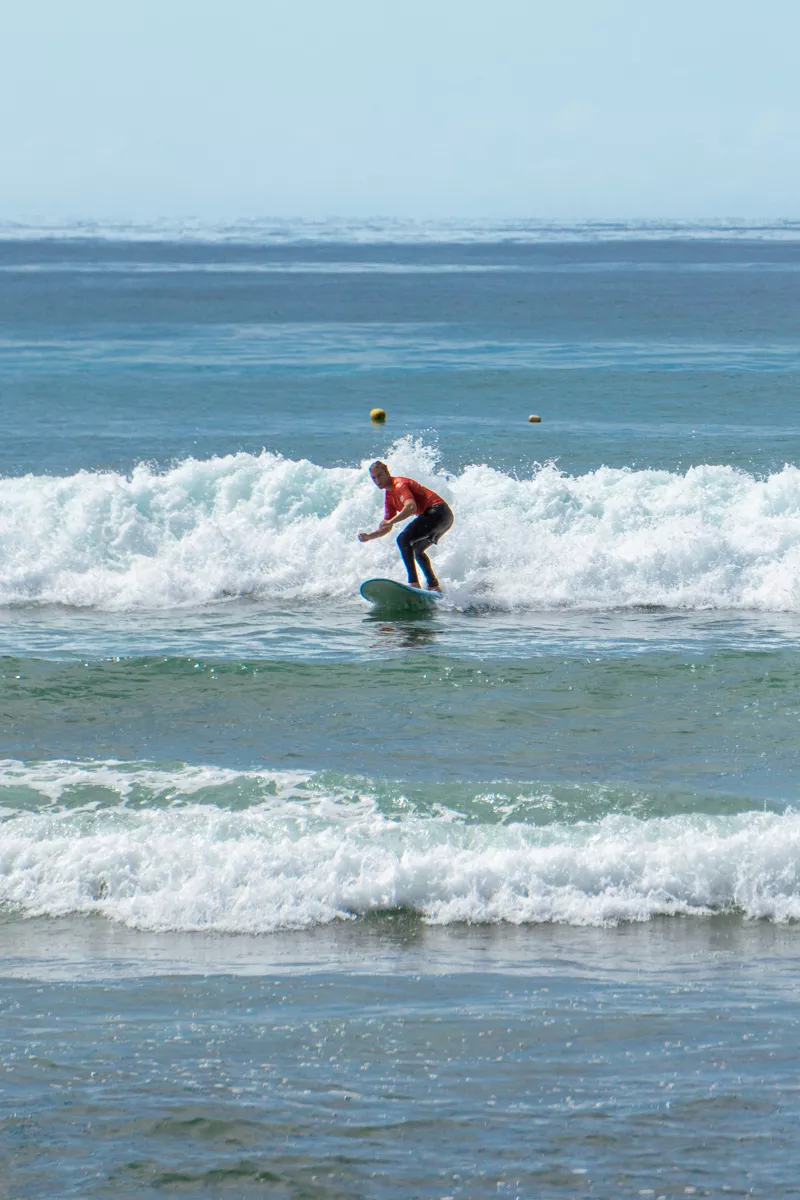
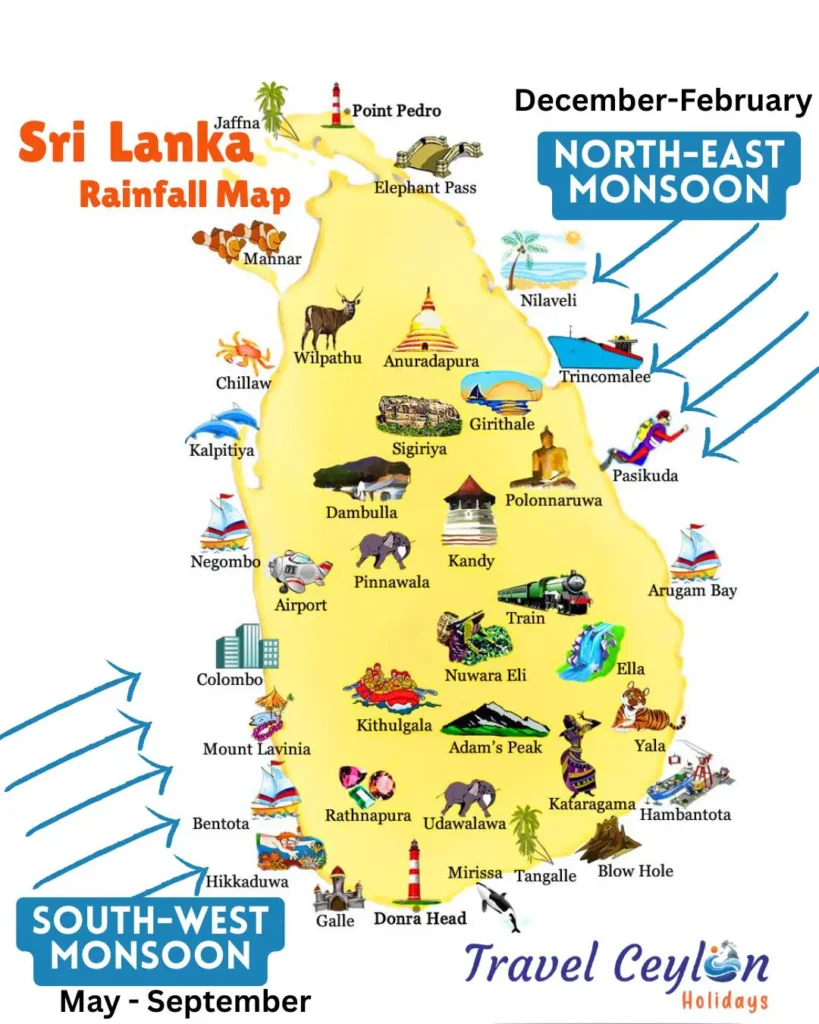
Sri Lanka’s weather is quite unique because even though the country is small, they have two different monsoon seasons (something we didn’t know about before going). This means that you can actually come at different times of year and still have awesome weather.
The most important thing to do then is choose the right part of the country to visit during the time of year you plan to go, so you can avoid the monsoon.
That’s why we split it between these two main areas: South & West Coast + Hill Country versus the East Coast. Let’s take a look at them both…
South & West Coast + Hill Country
☀️ Best time: December to April
📍 Places to visit: Hit up beach towns like Mirissa, Ahangama, Unawatuna, and cultural stops like Ella and Kandy
If you’re trying to escape the European or North American winter to visit somewhere warm, then the South and West coasts of Sri Lanka are the places to go.
Mirissa, Weligama, and a few other towns on the south coast are awesome little surf towns (the best surf camps are in that area), full of life and lots of travellers.
You’ll find everything from amazing cafes to beautiful beaches, and get a great taste of Sri Lankan culture and history in the town of Galle!
North + East Coast
☀️ Best time: May to September
📍 Places to visit: Arugam Bay, Kumana National Park, Jaffna, Trincomalee and other more inland areas
From May to September, you can expect dry, sunny, and perfect conditions if you want to come and surf on the east side of the island or explore the northern coast.
It is less popular and touristy than the South and West side of the island, but during the May to September period, it is the perfect time to come spend time here.
Explore the northernmost tip of Sri Lanka in the city of Jaffna, the ancient Sigiriya rock fortress in the Matale District, or visit the pristine beaches on the East coast.
Respecting the culture
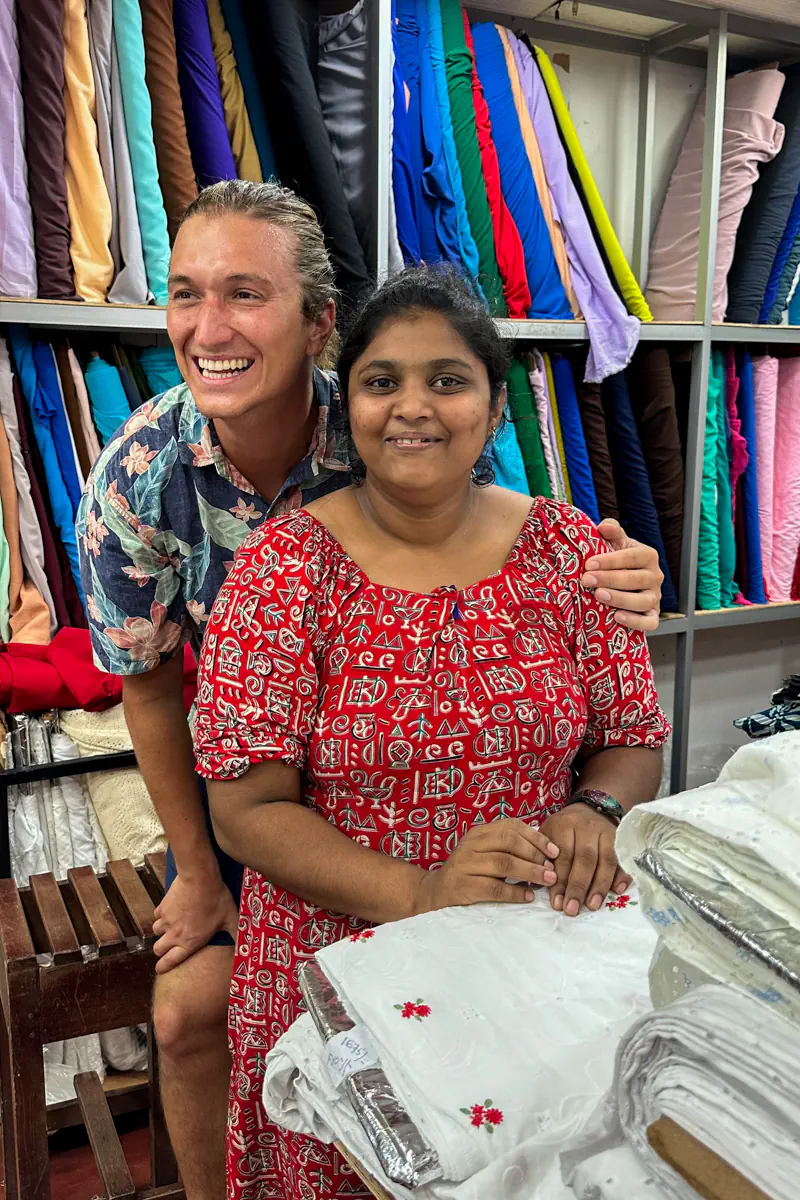
One thing that many people aren’t aware of is that Sri Lanka is primarily a Buddhist country with deep cultural traditions. You see it from the way they act to the way they treat others, and the land and Buddhism are a very big part of their culture.
Similar to how we appreciate when foreigners come to our home countries and respect our customs and traditions, it’s our responsibility to do the same when we visit others.
Sri Lankan people are very welcoming and accommodating, but there are a bunch of small things we can do to be respectful of the people and the culture of Sri Lanka.
- Dress appropriately for temples (shoulders and knees covered)
- Remove shoes and hats before entering sacred sites
- Remove shoes at the front of cafes, homes, and restaurants
- Try to avoid public display of affection as it’s not common in their culture
- Bargain politely. Try to find a fair price where everyone wins, but in a kind and friendly way
- Show patience. Things run slower in Sri Lanka, and that is just the way things are here
- Support small businesses (and pay cash when you can)! This helps the locals enormously.
- Ask before taking a photo of someone. Most people won’t mind, but it’s always good to ask before taking the photo.
- Knowing a few local words goes a long way:
- Stuti (thank you – Sinhala)
- Kohomada? (How are you? – Sinhala)
- Nandri (thank you – Tamil)
- Eppadi irukka? (How are you? – Tamil)
Sri Lankans are warm, kind, and appreciative when travellers respect local customs. Even little things like learning how to say thank you in Sinhala (the Sri Lankan language) go a long way.
Getting around Sri Lanka
Transportation in Sri Lanka can be an adventure of its own! We actually almost cancelled our trip to Sri Lanka because of the fear of horror stories of how crazy the buses are and how wild the traffic is.
What changed our minds, though, was watching this video of the highway, realizing that the road we’d be taking wasn’t as crazy as the stories we’d heard.
But once you get off the highway and into the towns, let’s just say the buses are crazy and there is lots of traffic – but it’s a lot safer than the stories you hear.
As long as you’re aware of your surroundings and look after yourself, the likelihood of something happening is very slim.
It might seem chaotic at first, but it’s very simple… The buses have priority. They’re the #1 on the road, so always give way to them.
And also, you’ll be hearing a lot of honking. At first, we thought it was loud and annoying, but we quickly realized that they honk when they’re passing to let you know they’re passing – and suddenly it made sense. It’s organized chaos!
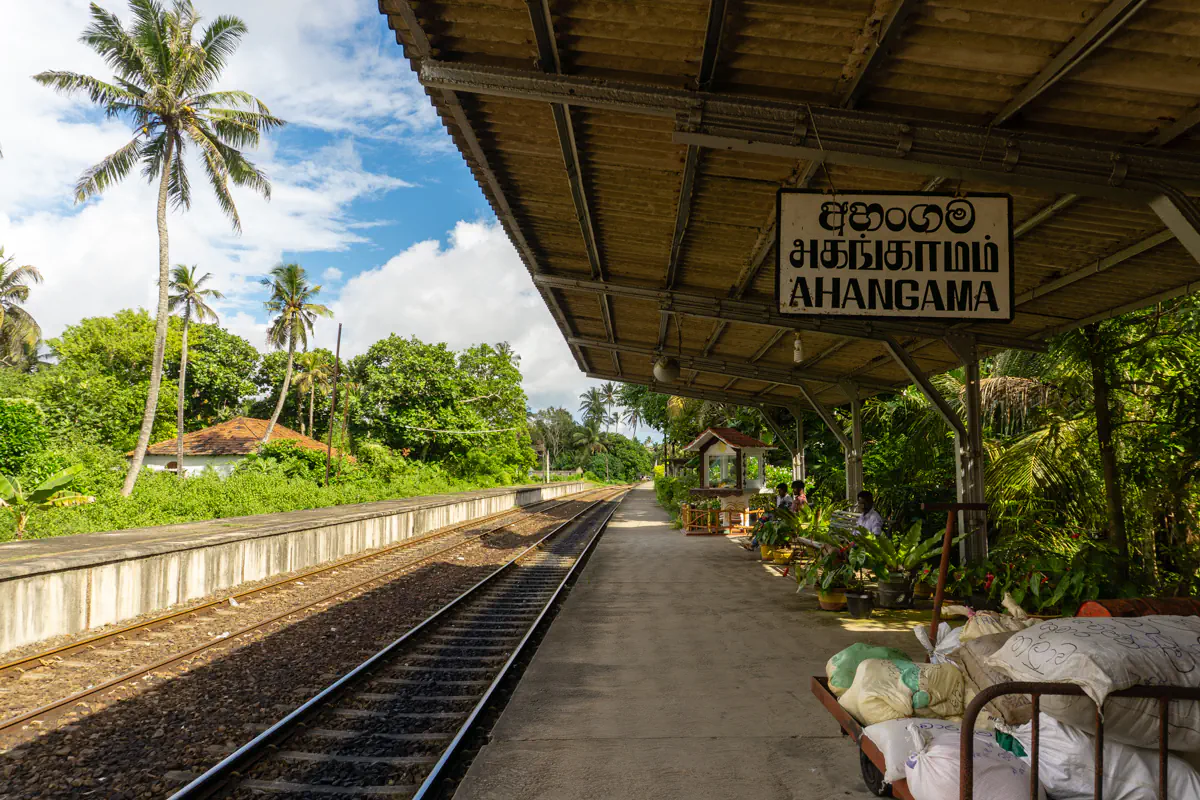
There are many ways you can get around in Sri Lanka, but the methods we used were private transfer (from the airport to Ahangama), tuk-tuks (between towns and to surf spots), and trains (when we went from Ahangama to Galle).
You can learn more about how to get around in Sri Lanka here.
Money & budgeting

Sri Lanka is generally an affordable destination, but costs can vary depending on where you go and what type of attractions you want to visit.
Depending on your travel style and type of accommodation and choice of restaurants, you can more or less make it as affordable or expensive as you want.
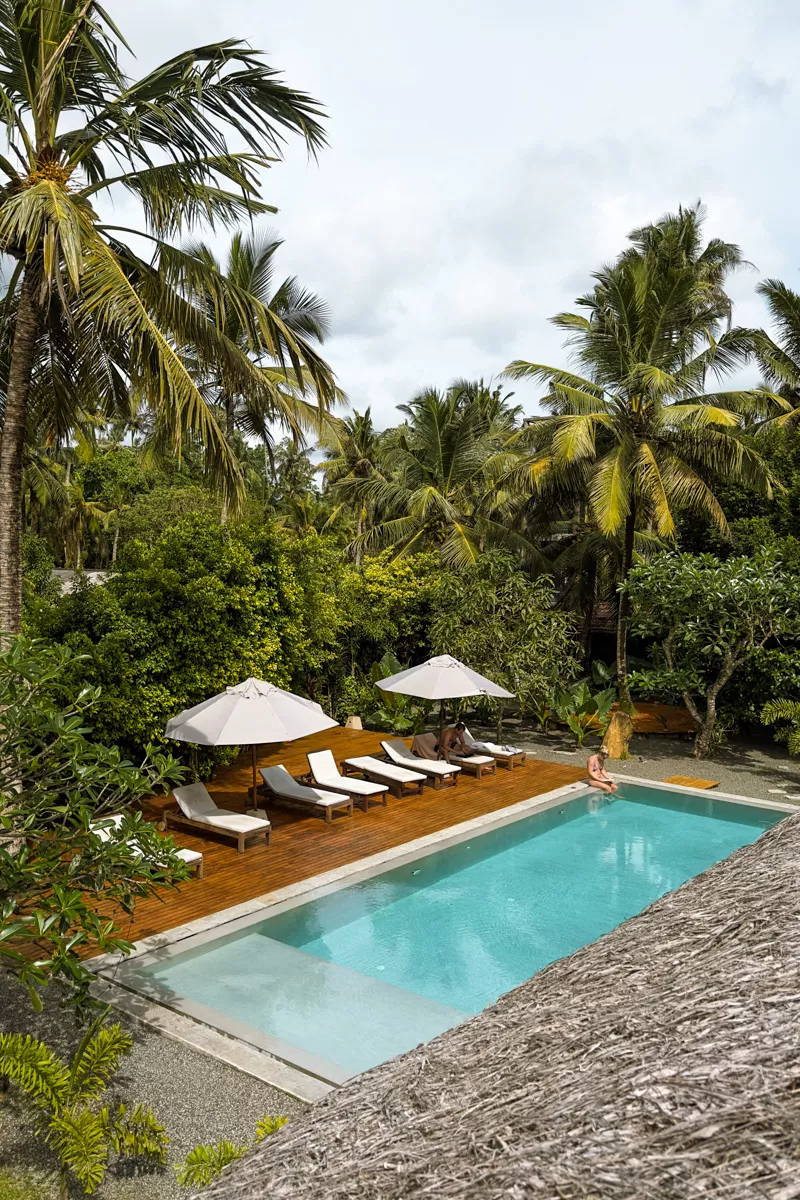
You can find local guest houses for as little as $15 USD a night, or more luxurious stays for anywhere between $100 and $500 USD a night.
Local meals: $2 to 4 is pretty standard for traditional meals at local restaurants + tips
Restaurant meals (mid-range): $5 to 10 for a meal with a soda or water + tips
Guesthouses: $15 to 30 (it can be a bit cheaper in a less touristy area, and if you book for multiple weeks)
Hotels: Hotels start around $40 and cost up to $120 USD (or more)
The currency in Sri Lanka is Sri Lankan Rupees, and $1 USD is roughly 300 Rupees. A lot of places accept card payments, but cash is king and is always more appreciated than card payments.
There are plenty of ATMs you can use, but there are sometimes withdrawal limits (both on the ATMs and also on your card), so we suggest bringing an additional card – just in case.
⚠️ This is also one of the scams you need to look out for when you’re in really touristy places. We have a friend whose card got copied in an ATM at a nightclub, so always check the ATM before inserting your card. Here’s a video explaining more.
Do you tip in Sri Lanka?
Yes, tipping in Sri Lanka is common and very appreciated amongst the locals. Around 10% is standard.
How to avoid getting sick from food & water in Sri Lanka
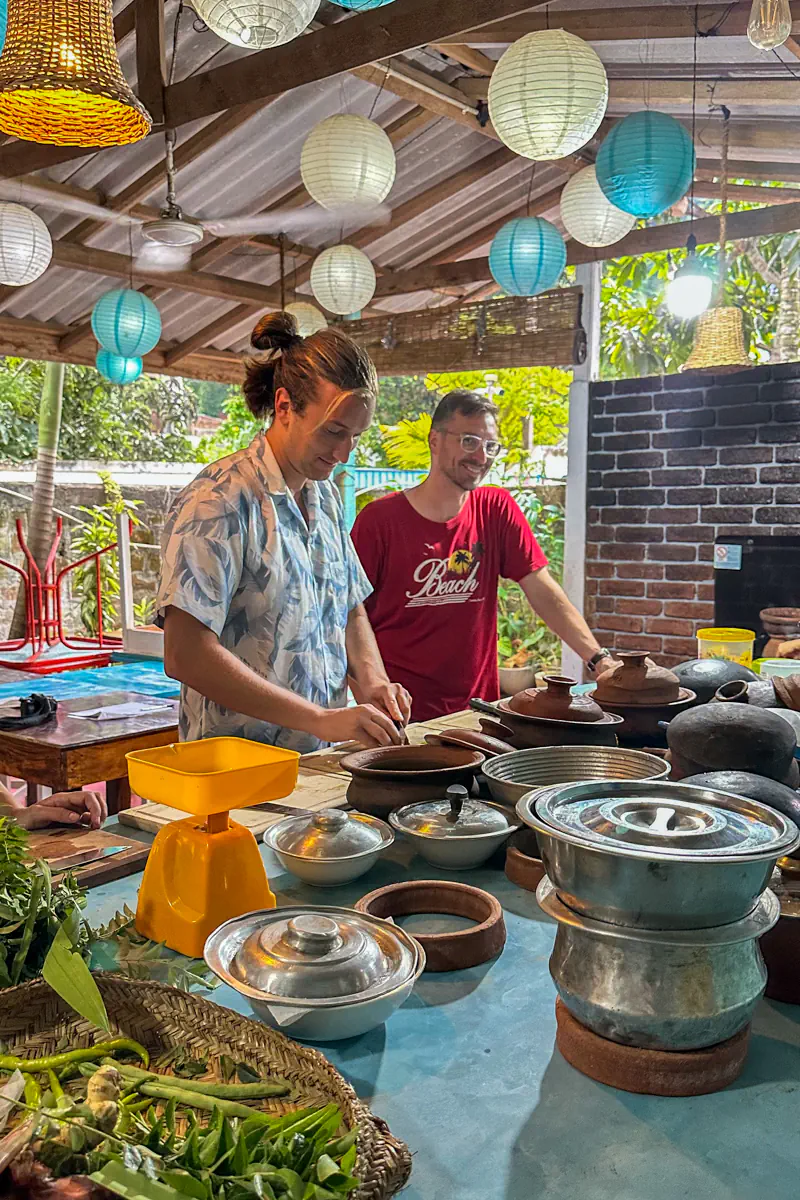
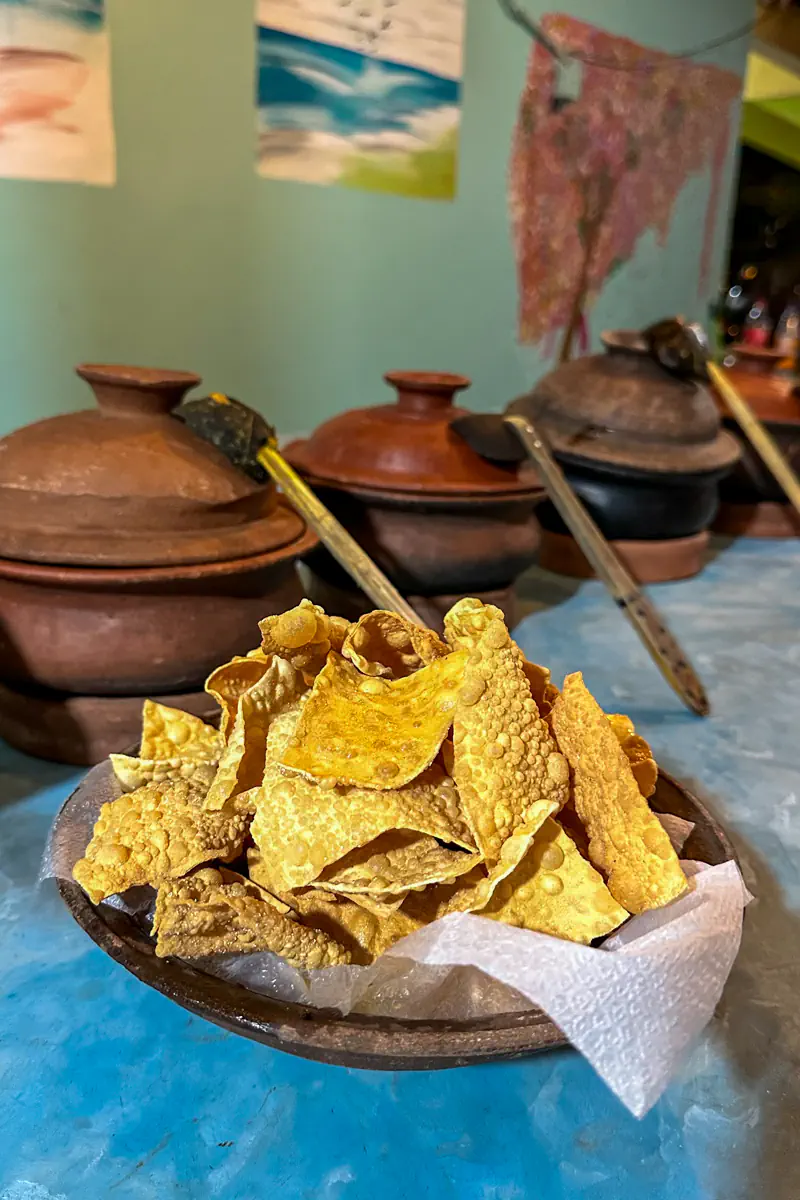
Water from taps and public places is not drinkable. You’ll always have to buy water, or get it from the big water jugs at the hotel you’re staying at.
At Lapoint Surf Camp, they had big jugs of water that I would fill my water bottle up whenever I needed, and out at restaurants, they would provide bottled water.
Personally, we also avoided ice at the small stalls on the side of the road and at little local restaurants just because our bodies might not be accustomed to the bacteria and things in Sri Lanka. In big restaurants and popular cafes, we worried less about it, though.
As for food, we suggest avoiding fresh salads (especially in the beginning, as your body is adjusting), and sticking to popular places and local places.
If you walk by a place and have second thoughts about the hygiene, I would skip it because there are so many food options that you’ll easily find a place you’re happy with.
If a place is busy (especially with locals), that’s usually a good indicator as to where the food is both tasty and “safe” to eat.
How to stay connected (eSIMs vs local sims)
In the past, I would say it was so easy and cheap to buy a SIM card right at the airport, but nowadays eSIMs are the way to go.
The best thing about an eSIM is that you can buy and prep it before you get to Sri Lanka – so once you land, you just have to activate it!
It’s so convenient and, depending on your plan, usually way more affordable than using your sim card from home.
💙 Use code “FALLY20” to get a 20% discount on your first eSIM 💙
How to stay safe and avoid scams

Sri Lanka, in general, is a very safe country for travellers, including solo travellers, but there are always some good things to keep in mind:
- Tuk-tuk overcharging is common! Always agree on a price upfront (and check with your place of accommodation what the price should be to the place you’re going).
- Roads can be hectic. Cross carefully and avoid wandering at night in busy traffic areas. And keep in mind that buses have first priority on the roads!
- You will get street peddlers come up to you and ask for money from time to time. Either ignore them or politely say “no, sorry” if you don’t want to continue the conversation.
- “Helpful temple guide.” While this isn’t a scam as such, some people will try to take you around like a guide and ask for money at the end. If you’re not interested, politely tell them, and they will back off.
- Fake jewellery. Some jewellery shops may try to sell you jewellery claiming it’s real when it is actually fake. Not all shops are like that, but it’s good to be aware that this can happen.
- ATMs copying your credit card. We briefly touched base on this above, but always double-check the ATM properly (by pulling at the thing where you’re supposed to insert your card) just to be on the safe side.
Last but not least, police “fines” is another scam you might encounter…
If you’re riding a scooter, it’s not uncommon that police will pull you over at a check stop and ask you to pay a fine that you do not have to pay.
While you shouldn’t have to pay this, they also make it very obvious who is in power. You can try to tell them no or say that you’ve already paid it yesterday, but sometimes it’s best to just pay up. It’s not fair, but this does happen!
Overall, Sri Lanka is welcoming, friendly, and easy to enjoy as long as you know which types of scams to look out for.
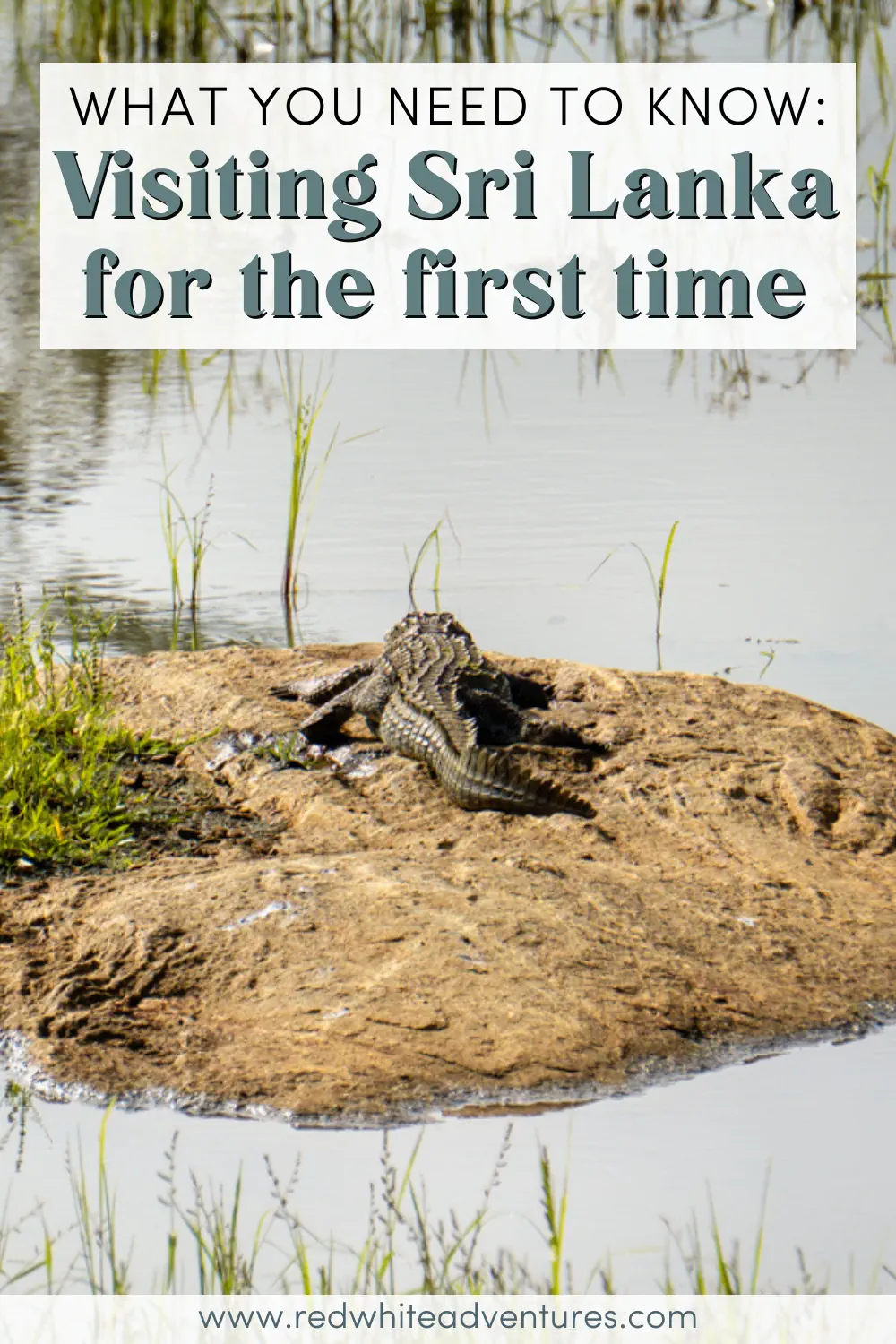
Beware of the crocodiles
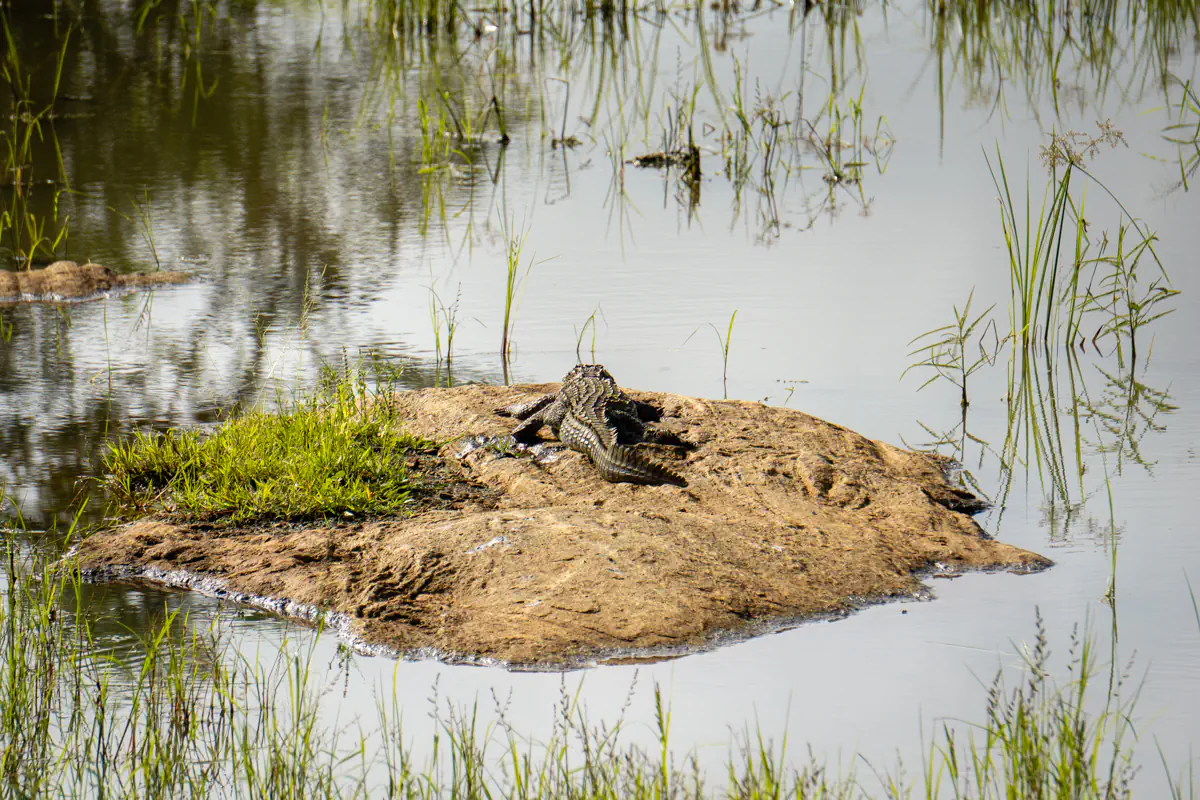
I could go down a rabbit hole about this, but there are crocodiles in Sri Lanka. And while this probably shouldn’t be a surprise, we did not know this before visiting.
They have freshwaters (mugger crocodiles), which live in the national parks and more inland, as well as in the Kogalla Lake near Ahangama, where you can go on a Crocodile Safari.
That part we knew. What we didn’t know was that these aren’t the only places they live. They are actually all over the country, and we even met a few locals who tried to deny this – even after seeing one in Mirissa and another one in Weligama ourselves.
What we also weren’t told is that they have saltwater crocodiles, which are a lot more dangerous to humans than freshwater crocodiles are.
We definitely wouldn’t let this stop you from visiting, but it’s something we wish we had known beforehand!
Knowing this, you can stay safe by staying clear of murky water – and if a beach is completely empty, don’t go in the water or surf there without consulting a local expert first. If a place is empty, there might be a reason for this.
Here is a map of the crocodile population and locations. While this shows saltwater crocodiles on the south west coast, we’ve also seen videos of one spotted on the east coast.
Final thoughts about visiting Sri Lanka for the first time
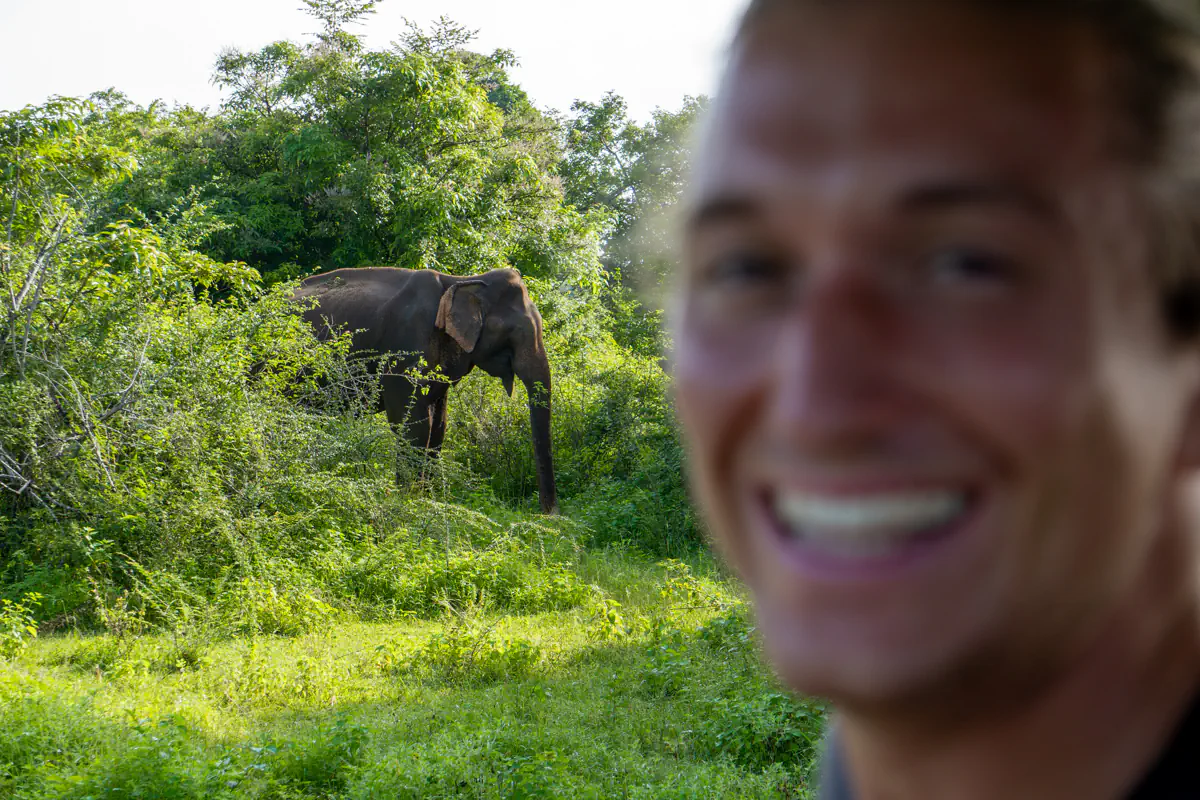
We had an amazing time surfing in Sri Lanka and exploring around the southern coast. This country is full of beauty, culture, adventure, and warmth. Whether you’re planning to surf on the south coast, hiking around the middle of the country, or exploring the temples and the safaris, this place has something for everyone.
Even though it’s a pretty safe country for the most part, it’s good to do a little preparation before, as it’s a bit different than travelling around Europe, North America, or New Zealand.
From knowing where to visit when, how to get around, and what to pack, we hope this guide helps you prepare for your trip and gives you the best experience once you’re here.
If you have any questions, feel free to DM us on Instagram @redwhiteadventures or leave a comment below. We love helping out when we can. Enjoy this beautiful country!
Read next: The Ultimate Digital Nomad Guide to Sri Lanka 🇱🇰🌴🏄♀️🐘
📍 Save this post for later & share it with a friend