Incredible Whale Watching & Dolphin Tour in Ponta Delgada (São Miguel Island)
Before coming to the Azores, we knew that it was one of the best spots in the world to see whales and dolphins (with 28 out of the world’s 94 cetacean species found here!). So, of course, going on a whale watching excursion was at the top of our bucket list!
The first island we visited in the Azores was São Miguel, and this island is supposedly one of the best islands to go whale watching from (along with Pico and Faial), so we booked a tour for our first day in the Azores – and it was incredible!
In this post, we’ll share our personal experience on this whale watching tour, including what you can expect, our honest thoughts on the tour (what we liked and what we didn’t), and everything else you need to know before going.
Disclosure: This post has been created in collaboration with Visit Azores. Everything in this post is based on our personal opinions and experiences. This post also contains affiliate links, which means if you decide to use the links and make a valid purchase, we will receive a small commission at no additional cost to you.
Everything you need to know before whale watching in Ponta Delgada
There are different spots around the island you can go on a whale watching experience from, but since we were staying at Hotel Marina Atlântico in Ponta Delgada, it was super convenient to be only a 10-minute walk from the departure point (Ponta Delgada Harbour Portas do Mar).
The day after we arrived on São Miguel Island, we got up early and headed down to the harbour to get ready for our 8:30 am boat tour. And I had a blast! (Dom not so much, but we’ll get to that later).
Because the Azores is such a popular spot to go whale watching, there are a ton of different companies you can go with. We went with Futurismo Azores Whale Watching as suggested by the local tourism board, and they were great.
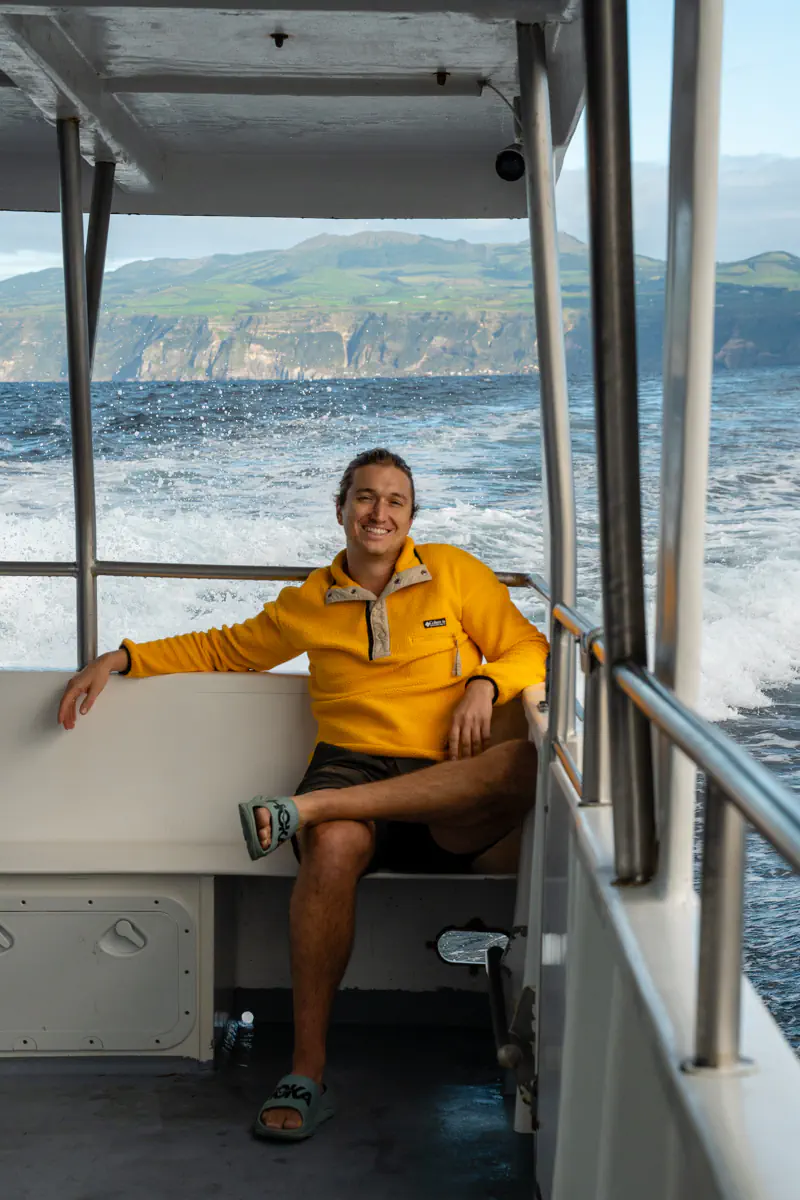
We booked the tour in advance and planned it for our first morning since we knew that occasionally, the tours can get cancelled due to bad weather. This way, we had a buffer so we were sure we’d be able to go during our time in São Miguel.
We lucked out and had good weather for our scheduled departure time, so we managed to stick to our itinerary.
The tour is around 3 hours long (which is pretty good given the fact that it only costs around €70), and you should arrive no later than 15 minutes before to check in and get your “boarding ticket”.
Make sure you come prepared and bring warm layers, ideally a wind & waterproof jacket, a power bank for your phone or camera, as well as water and sea sick tablets if you tend to get sea sick.
🐳 Don’t have time to read the full post? We recommend booking a morning tour on your first day in São Miguel. This is the tour we did! 🐬
What to expect on a whale watching tour from Ponta Delgada
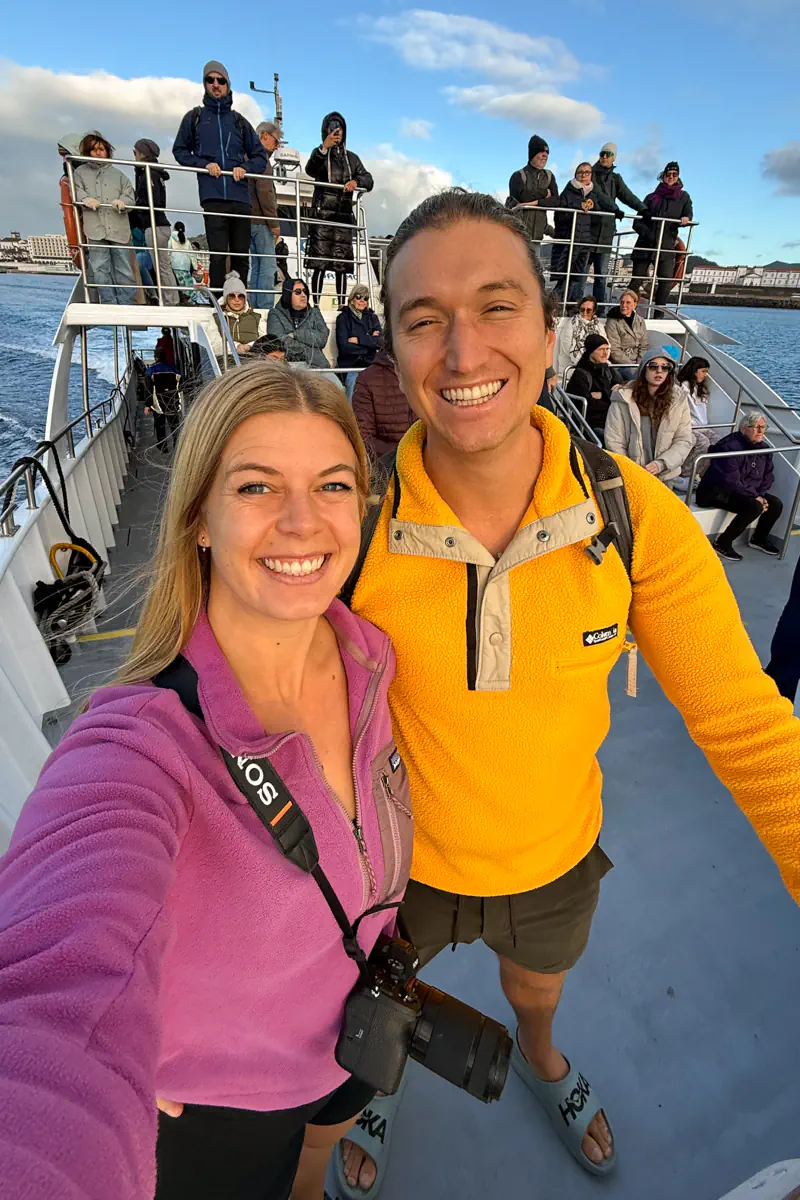
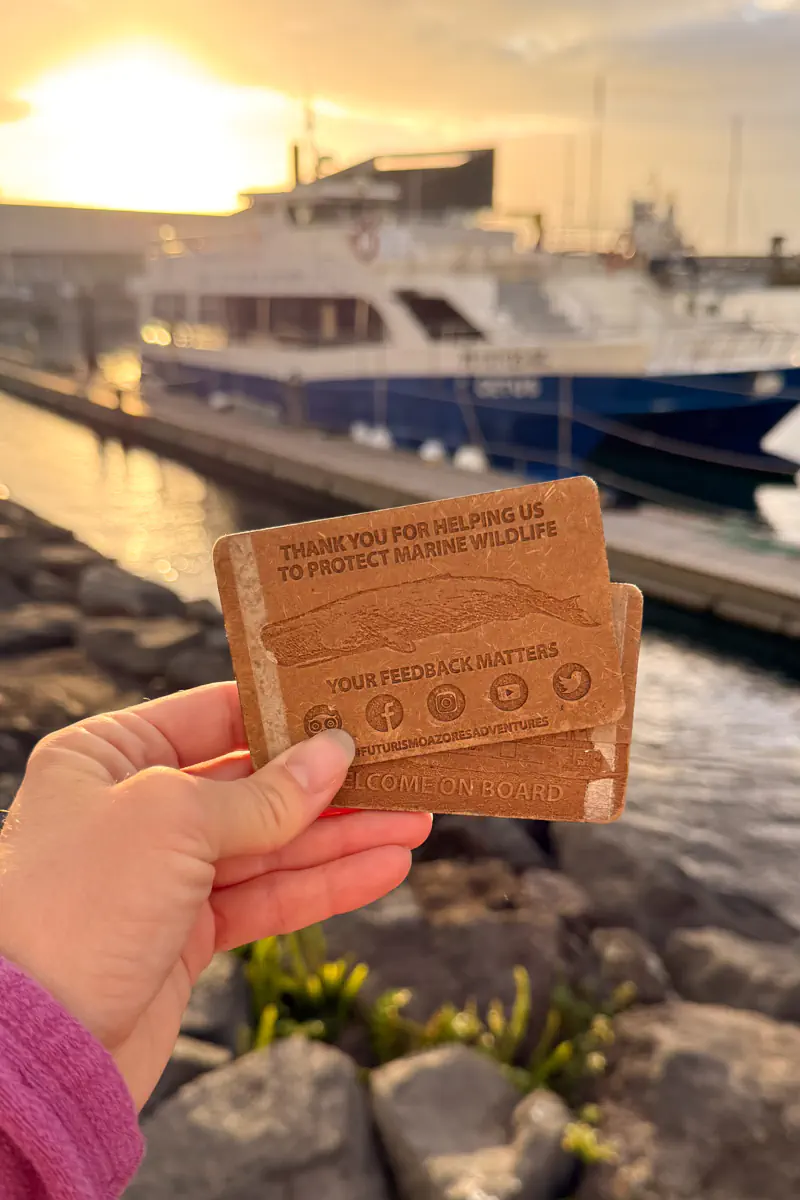
The tour started off with a safety briefing and a quick introduction to the different whale & dolphin species we could potentially see.
They also clarified that this was not guaranteed, as they are wild animals, and that sometimes you get lucky, othertimes not so much. However, if you don’t see anything, you can go back on another tour free of charge, which I think is a nice service.
On our tour, I was really hoping we’d see Sperm Whales, but unfortunately, we did not see any whales at all.
You would think we would be disappointed at this (given the fact that the Azores is one of the best places in the world to see whales), but actually, we weren’t. You know why?
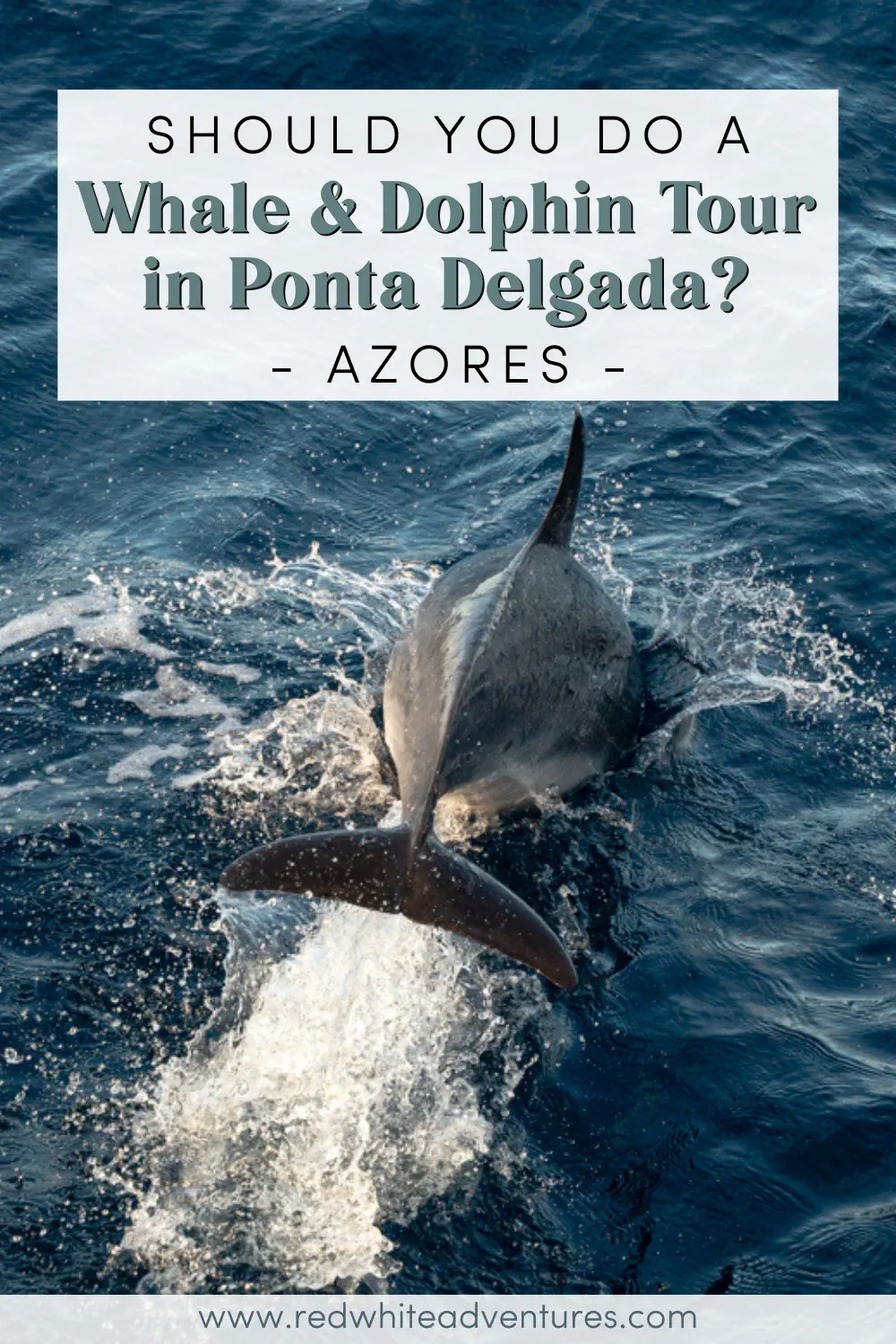
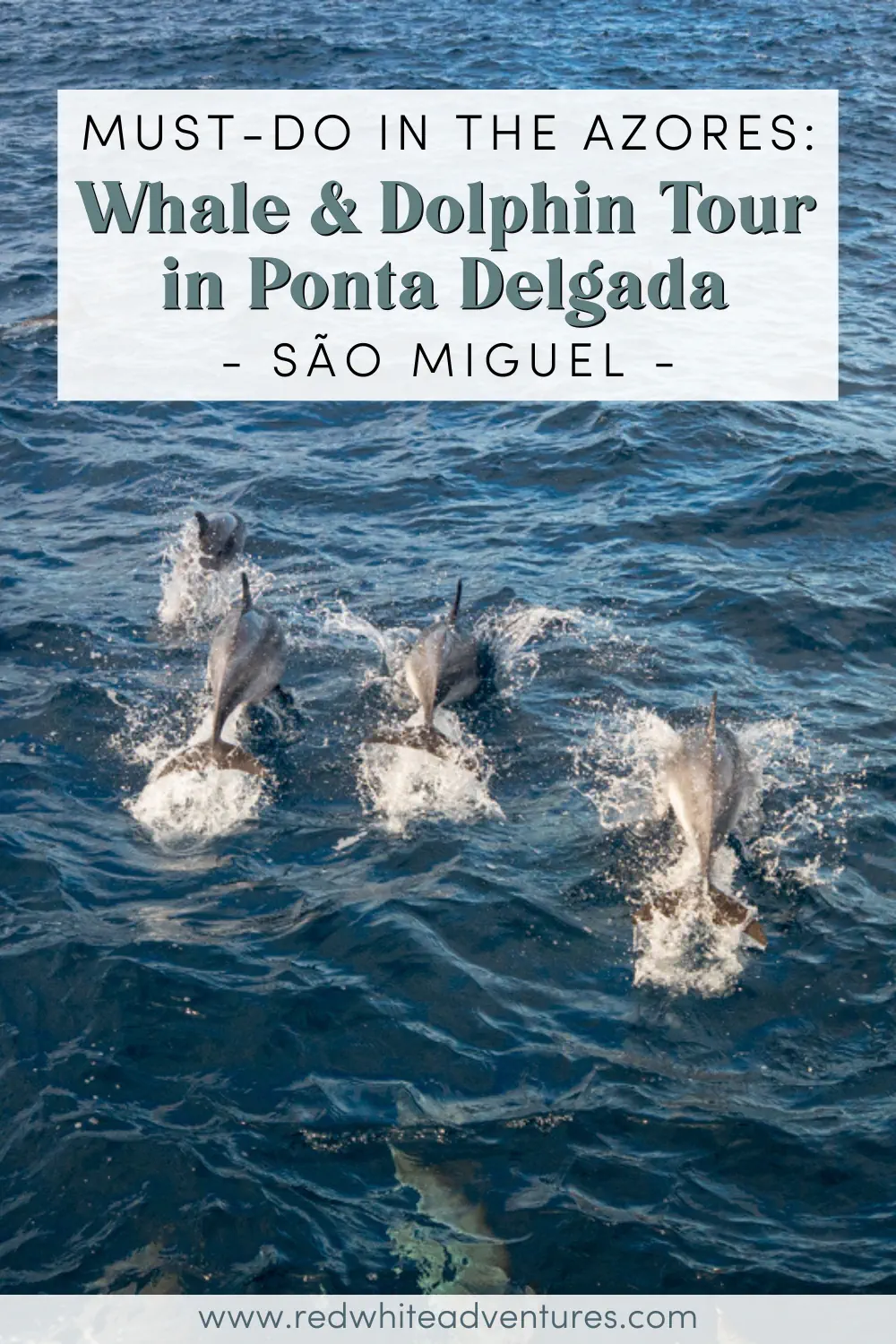
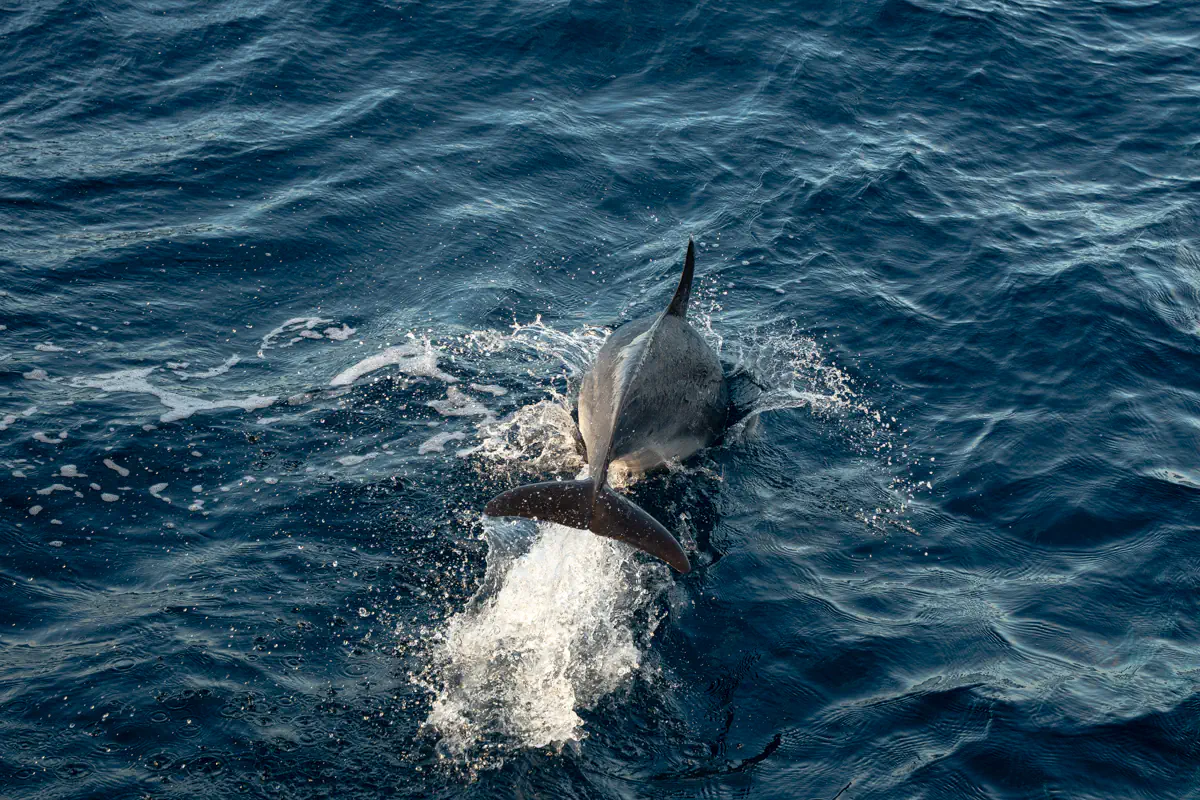
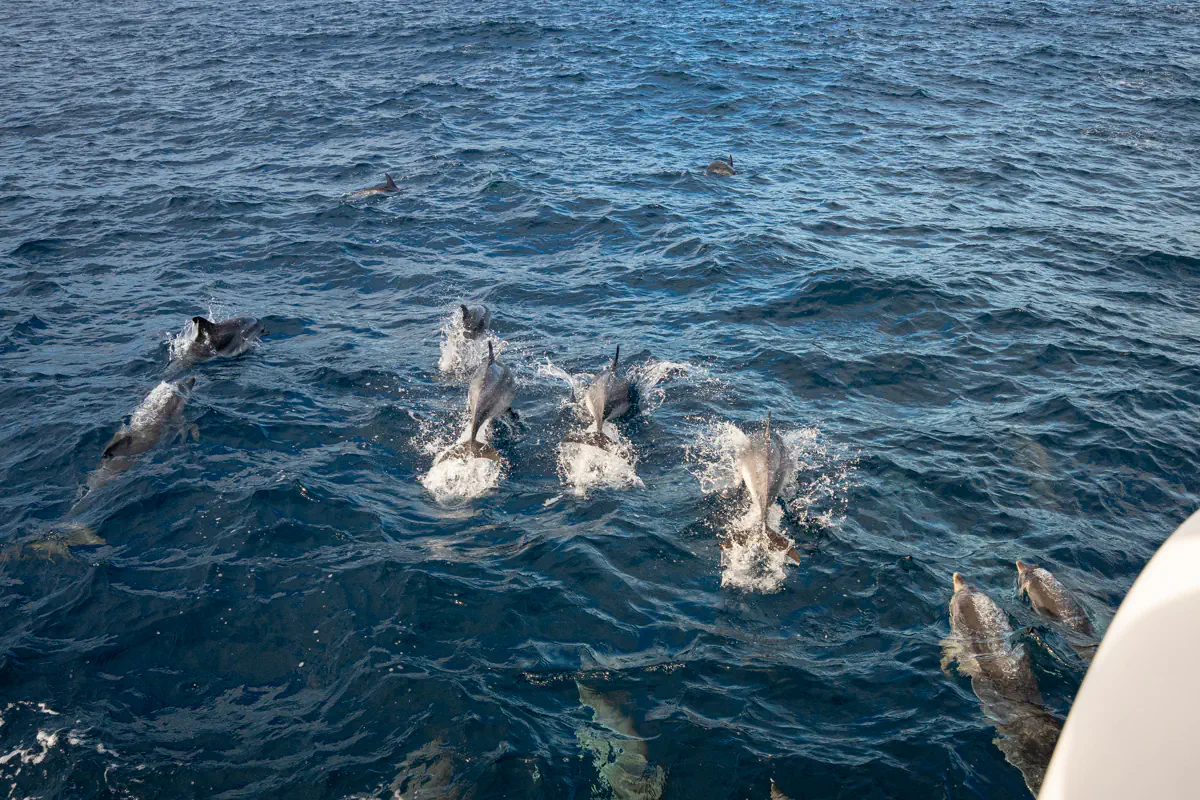
Because we saw the biggest pod of dolphins I have ever seen. I am not kidding, there were at least 200 dolphins in one pod, and they stayed with us for so long!
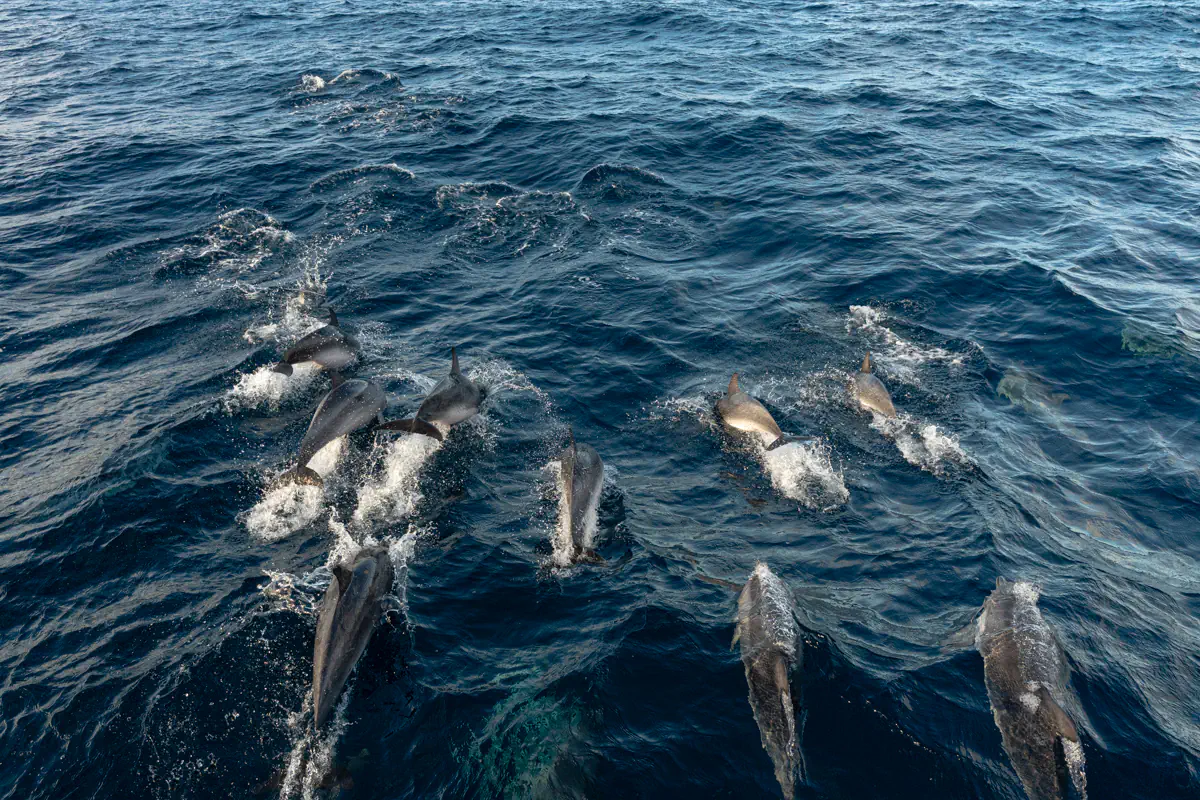
We actually saw two different pods of dolphins – the first one was a group of Common Dolphins that were swimming next to the boat and playing in the water right in front of us.
It was incredible and so captivating that I almost got teary just writing this!
The second group of dolphins we spotted was even more incredible! 200+ Atlantic Spotted Dolphins that were on both sides of our boat and in front of it, playing and jumping out of the big waves, doing acrobatics for us.
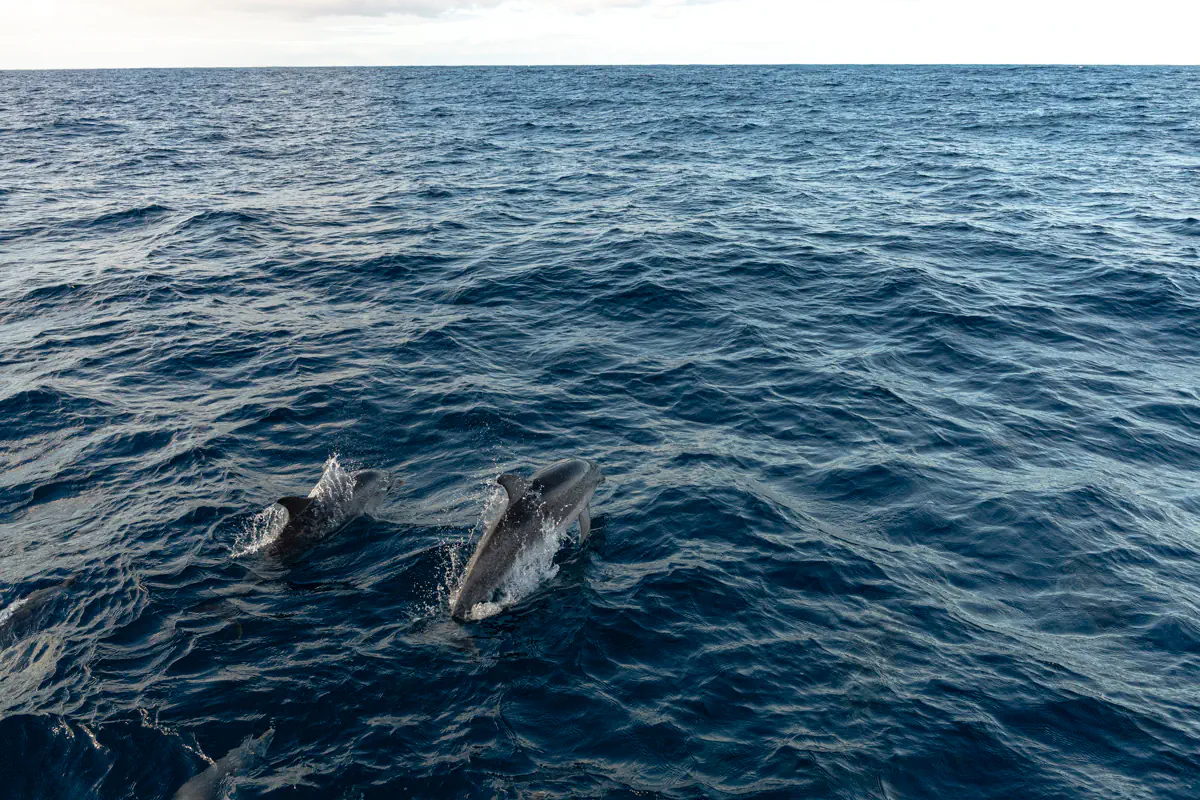
There were also a bunch of calves around, and some of them were jumping too, clearly taking after the grown-up dolphins.
It genuinely felt like the dolphins loved it as much as we did. And when they were done with us, they set off from the boat, putting on a final show as if to say goodbye to us. It was incredible!
When is the best time of day to see whales and dolphins?
Generally speaking, mornings tend to be the best time to go since the water is usually calmer this time of day, which makes it easier and more comfortable to sail (it can get rough out there).
The light is also softer this time of day, which makes it easier to spot & photograph the marine life.
If you go on a morning tour, you can head over to Anfiteatro Lounge for lunch afterward, which is one of the best restaurants in Ponta Delgada.
That being said, the afternoon isn’t necessarily a bad time to go either. While the water can be rougher later in the day, the “spotters” have more information from the morning tours around where the dolphins and whales have been seen on the given day, which often makes it easier to find them in the afternoon.
You can check out their availability and departure times in this widget 👇🏼
What type of boat should you choose?
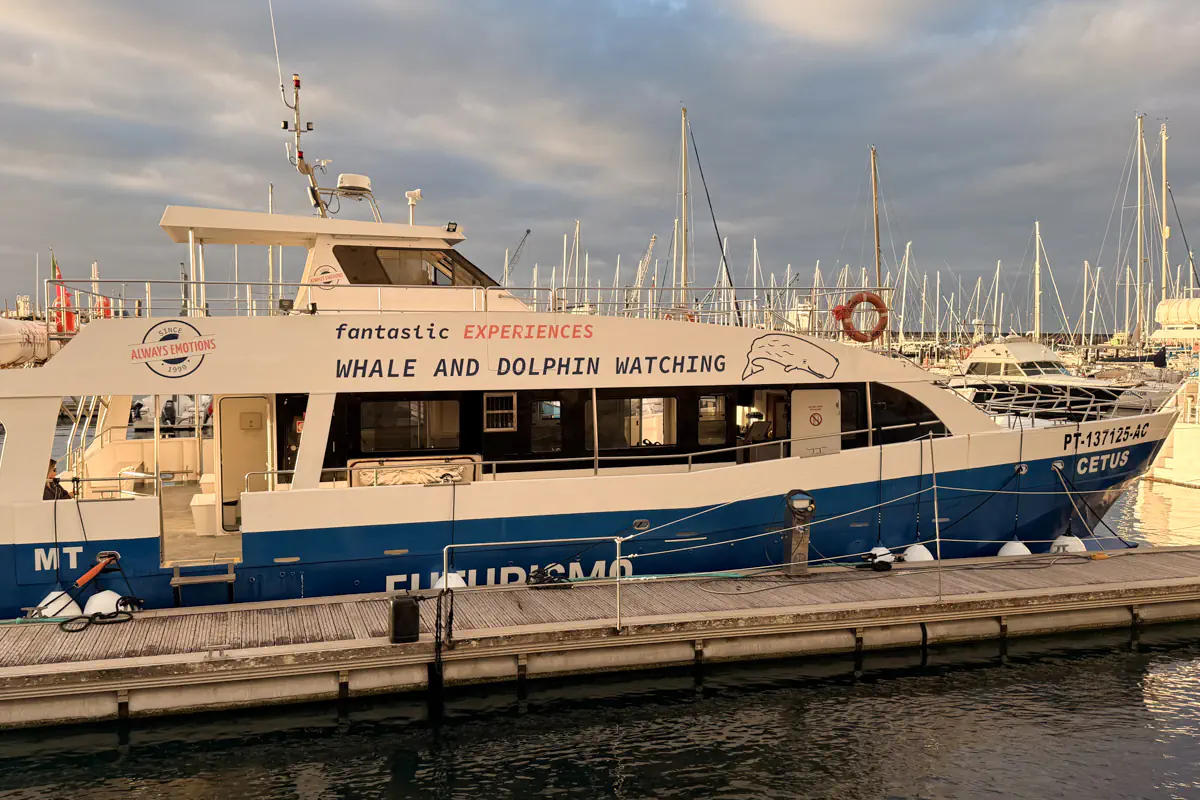
There are two different types of boats: Catamaran and Zodiac.
We went on a catamaran tour, which was probably good given the weather. But if you go during the summer months, when the weather is more stable, a Zodiac would be amazing.
Generally speaking, you will be more likely to have close encounters with the wildlife if you go out on the Zodiac, given the size of the boat. That downside is that you won’t have a toilet available, and the tour is likely going to be more choppy.
If you want a more comfortable journey (or you think that you might get seasick), select the catamaran. If you want more chances for close encounters and care less about comfort, go with the Zodiac!
To select your boat, first select your party size and date here, then click on the type of boat you want to go on, and the different available time slots will show. Select your preferred departure time, and that’s it.
Prepare for seasickness
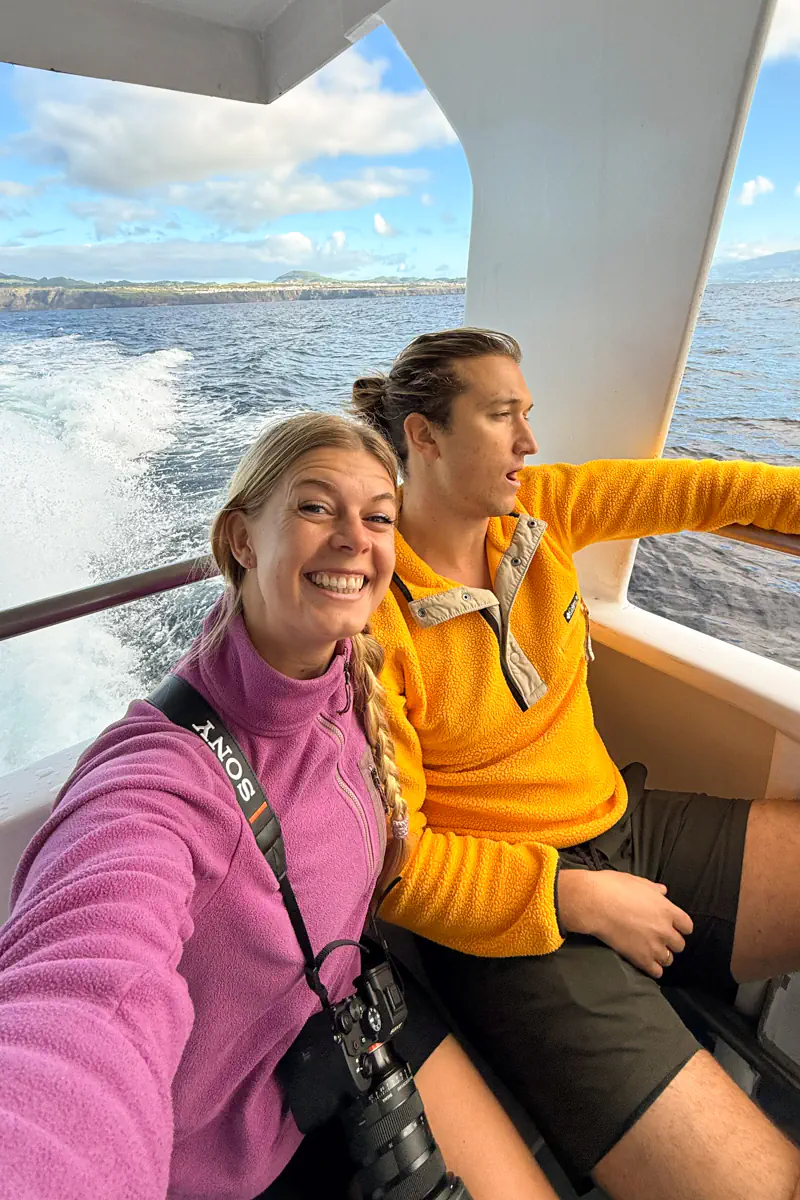
As you probably know, the Azores is an island group in the middle of the Atlantic Ocean, so it’s isolated and wild – especially the water.
I don’t think we were fully prepared for how rough the water can get here, and even though Dom took a seasick tablet beforehand, it wasn’t quite enough to help him out.
When we went, they did not hand out seasick tablets to the people (but they do have sick bags on board), so it was good that Dom had his own. I think the issue was that he took it too early and that it didn’t last the full 3 hours of the tour.
The tour actually started off well, and Dom didn’t start feeling sick until we decided to walk inside to warm up a bit. As soon as he faced away from the water, walking in the opposite direction, that’s when things started going south very quickly.
I went back out into the fresh air, and even though I was very cold, it really helped me standing out in the front, feeling the fresh air, and moving with the waves.
So if you tend to get seasick, bring water and your own tablets, and check how long they last. And don’t forget to bring warm layers so you can stay outside!
Also read: Azores Packing List – What do You Need to Bring? 🎒
What else do you need to know?
What month is best for whale watching in the Azores?
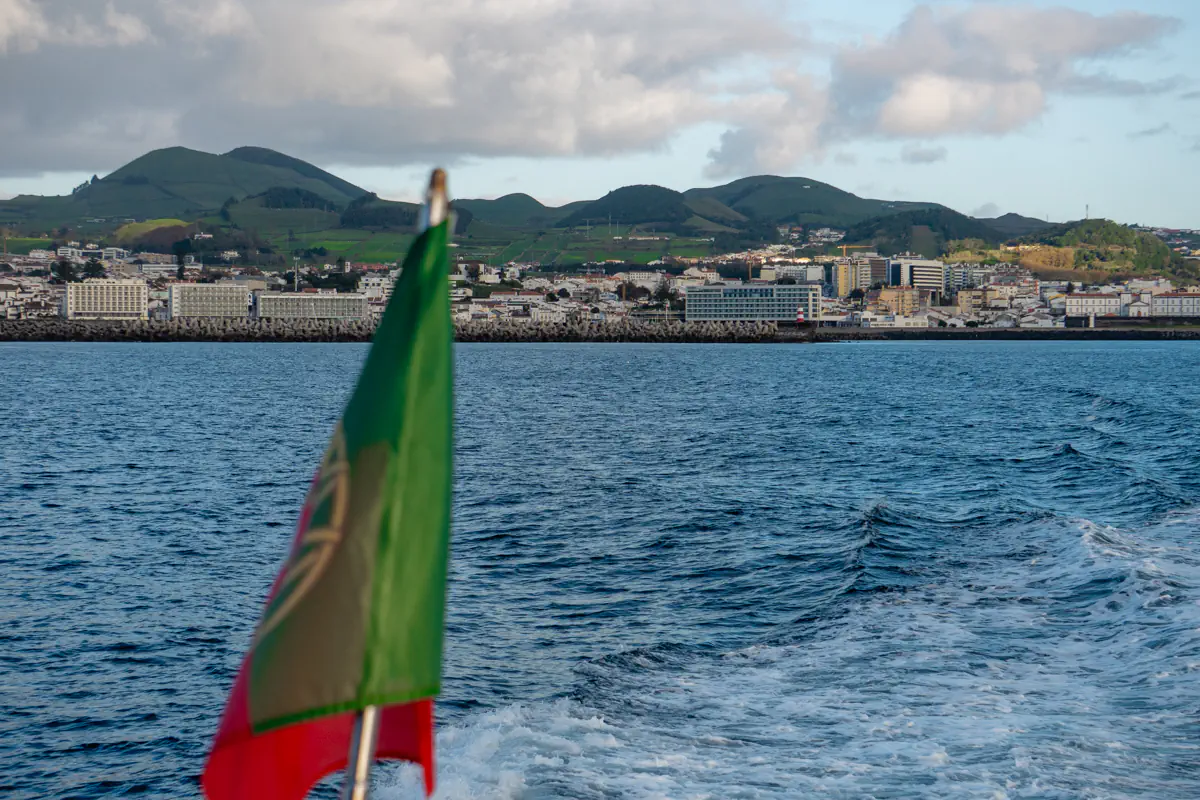
One of the beauties of the Azores is that you can actually go whale & dolphin watching year-round. Multiple cetacean species can be spotted all year round: the Sperm whales, Common dolphins, Risso’s dolphins, and Bottlenose dolphins.
That being said, though, there’s a clear peak season for whale watching tours, and that is April through October. Around this time is when the plankton blooms happens which attracts both Blue Whales, Fin Whales, Sei Whales, and many other species.
So if you’re planning your trip specifically around whale watching, April through October is the best time to visit the Azores! Make sure you visit multiple islands, as there are some variations between the species and the frequency of them.
📍 Want to know all the best spots in São Miguel?
We’re currently putting together a map with +75 locations around the island we know you’re gonna love. Join the waitlist and be the first to know when it’s ready for purchase! 🗺️
Which Azores Island is best for whale watching?
Speaking of, while this deserves to be a post on its own (which we’ll write eventually), we want to briefly cover which islands are best for whale & dolphin watching.
While you can go whale watching from pretty much all the islands, the ones that seem to have the highest success rate at spotting them are Pico, followed by Faial, São Miguel, and then Terceira.
Another spectacular island for whale watching is Santa Maria, which gets frequent visitors from whale sharks during the summer months (July through September). That would be a dream to see them and go scuba diving with them!
Is whale watching in the Azores ethical?
This is such an important question to ask before going on any sort of tour that involves wildlife, because, unfortunately, a lot of wildlife tours around the world are NOT ethical or sustainable.
From our personal experience, the Azorean people genuinely care so much about their nature and wildlife and treat it with a lot of respect. As a destination, the Azores has received multiple awards and certifications for being the best sustainable destination.
While you should always do your own research and due diligence – just like we did for this tour – we found that most companies (with the exception of a few, unfortunately) seem to be both ethical and sustainable.
We can mostly just speak for the tour that we did, but they gave us a full briefing on what they are allowed to do and what they are not allowed to do out of respect for the animals.
For example, they can never approach a pod or animal from the front. They are also only allowed to stay with each pod or animal for a certain amount of time – and all of those guidelines were followed.
Again, we encourage you to do your own research, but this was our experience and perception.
Looking for more Azores inspiration? Check out these posts:
- Epic Canyoning Experience on São Miguel, Azores
- How to Rent a Car from Ponta Delgada Airport
- Azores Packing List: What Do You Need to Bring?
- 5 Delicious Restaurants in Ponta Delgada, Azores
Final thoughts on our whale watching experience
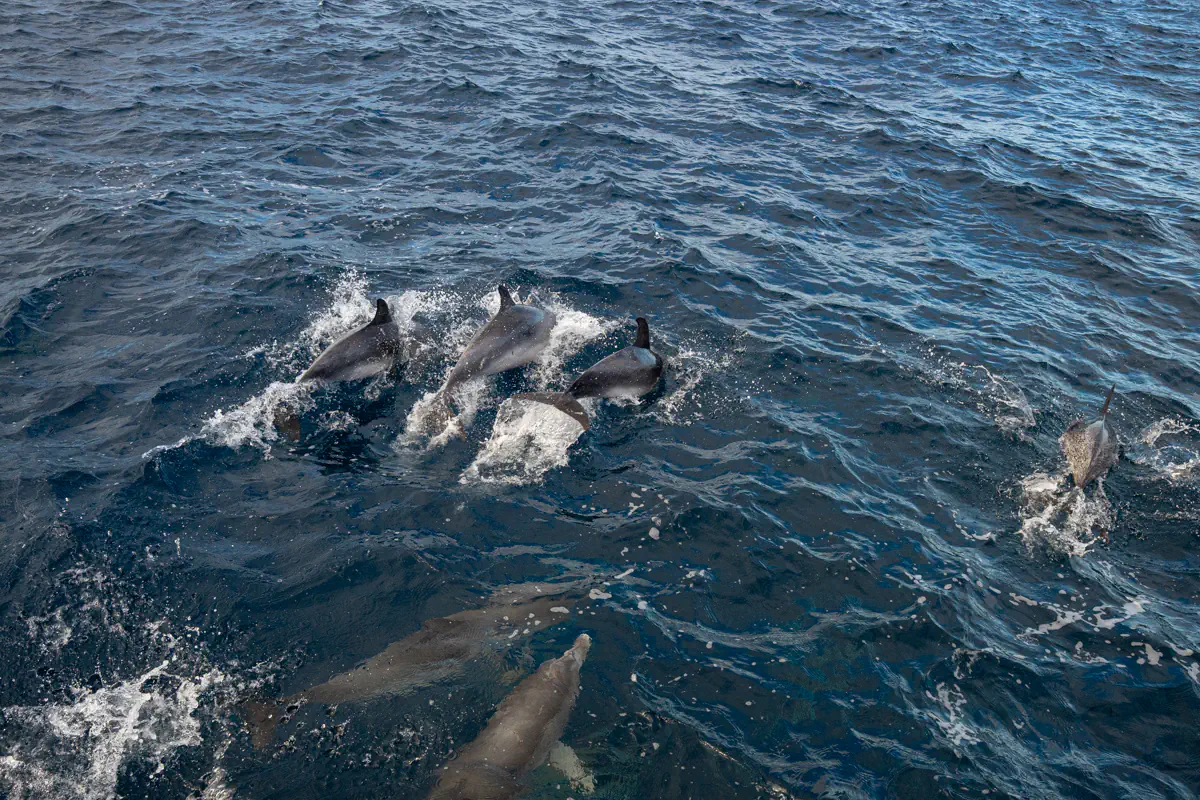
Out of all the things we did in the Azores, I can honestly say that the whale & dolphin watching tour was one of my top 3 experiences (watching the sunset at Mosteiros and hiking Misterios Negros on Terceira are the other two on that list).
While we didn’t see any whales, and Dom got pretty seasick, it was incredible seeing these dolphins in the wild, living their best life.
We’ve done quite a few dolphin & whale watching boat tours by now (including in the Algarve, on Madeira, and in Kaikōura, New Zealand), and this one might’ve been the best one we’ve done.
I’d love to go back on another tour whenever we return to the Azores to see if we can spot some whales next time around.
We hope you get to see both dolphins and whales when you go, and that you have an incredible visit to these beautiful islands in the middle of the Atlantic. The Azores are truly spectacular.
If you have any questions about the tour or the Azores, please leave a comment below, or send us a DM on Instagram, and we’ll get right back to you.
📍 Save this post for later & share it with a friend